


This Book is Out of Stock!
by
English


Paperback
₹3582
₹4341
17.48% OFF
(All inclusive*)
Delivery Options
*COD & Shipping Charges may apply on certain items.
Review final details at checkout.
Looking to place a bulk order? SUBMIT DETAILS

Piracy-free

Assured Quality

Secure Transactions
About The Book
Description
Author
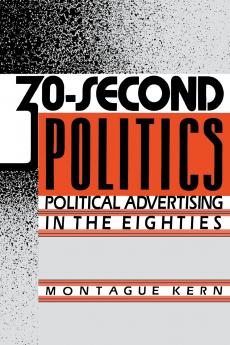
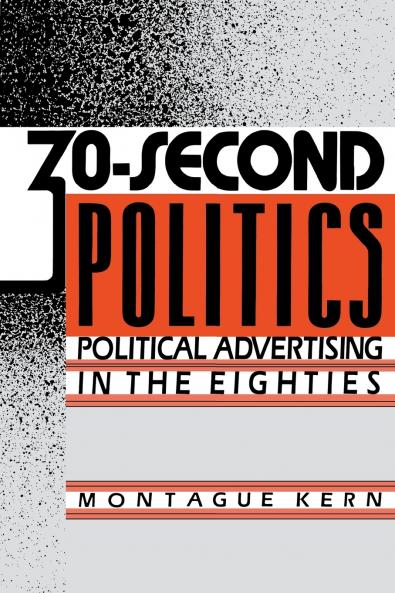
Advertising overwhelms news coverage. That is the essence of the point Montague Kern drives home repeatedly throughout her insightful examination of political advertising in the eighties. . . . Any professional interested in political advertising would profit from reading this book. It also would be useful to an undergraduate class on political communication or advertising. Journal of Communication Kern''s work joins a spate of books published in the 1980s on the nature production effect and importance of televised political advertising in US elections. Not however old wine in a new bottle it makes a distinct contribution in three respects. First other works typically focus on spot advertising in only one type of electoral contest primarily presidential senatorial or gubernatorial; Kern examines political ads at all electoral levels in representative regions and in a variety of mass media markets. Second Kern employs multiple data gathering techniques beyond conventional content analysis of ads or surveys of voters'' responses--interviews a Delphic panel and selected semiotic approaches. Finally the book addresses changes in the character and impact of televised political spots since the 1970s arguing that documentary news styles in ads have been replaced by those of commercial strategy of `touching someone.'' ChoiceIn this age of the media campaign where television is Americans'' preferred source of candidate information Montague Kern offers insightful scrutiny of political advertisements from 1972 to the present. This book closely examines a sample of ads and news coverage in the last stage of the 1984 presidential election and in senatorial gubernatorial and house elections in four geographically diverse markets. Kern interviews campaign consultants as well as campaign managers and outlines the significant changes in political advertising over the past two decades. She finds on the basis of an ad sample that most competitive senatorial and gubernatorial races in 1986 used negative advertising. The book goes on to explain the rise of negative advertising in the presidential race of 1988 an era in which media consultants are increasingly assuming primary responsibility for press relations the study demonstrates that ads can overwhelm news coverage and serve many purposes in addition to providing voters with campaign information. The informed general reader seeking a better understanding of the political advertisement phenomenon journalists who cover political campaigns as well as scholars in communications and political science will find 30-Second Politics invaluable reading.
Piracy-free
Assured Quality
Secure Transactions
*COD & Shipping Charges may apply on certain items.
Review final details at checkout.
₹3582
₹4341
17% OFF
Paperback
Out Of Stock
All inclusive*
Details
ISBN 13
9780275931957
Publication Date
-21-07-1989
Pages
-256
Weight
-369 grams
Dimensions
-156x234x13.67 mm
