


English


₹1689
₹1852
8.8% OFF
(All inclusive*)
Paperback
Delivery Options
Please enter pincode to check delivery time.
*COD & Shipping Charges may apply on certain items.
Review final details at checkout.
Looking to place a bulk order? SUBMIT DETAILS
Delivery Options
Please enter pincode to check delivery time.
*COD & Shipping Charges may apply on certain items.
Review final details at checkout.
About The Book
Description
Author
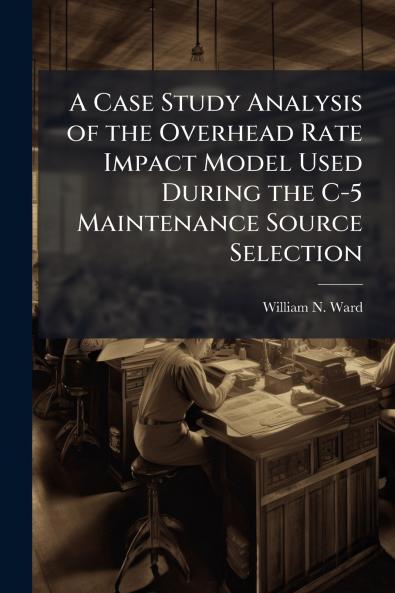
<p>The Overhead Rate Impact (ORI) model was used during the C-5 Maintenance source selection to evaluate the impact the new workload would have on the existing overhead rates. The objectives of this research study were to evaluate the ORI model and to identify the lessons learned from this source selection. To accomplish these objectives interviews were conducted with members of the source selection team who were on the Cost Integrated Product Team (IPT). The experts were asked to identify the strengths and weaknesses of the ORI model and to make recommendation on how to improve the model. This study identified strengths and weaknesses of the ORI model. The strengths identified by the research are that the model was easy to use and the fact that the model can calculate overhead savings quickly. The weaknesses identified by the research are that the model uses an average overhead rate for the entire facility the accuracy of the inputs is questionable the model does not address limits to the amount of excess capacity and that the model does not account for the theoretical limit to savings. Based on these findings this research makes recommendations of how overhead savings should be evaluated in future source selections. The recommendations are that overhead savings should be calculated at the lowest possible level the amount of existing excess capacity should be evaluated the rate and factor inputs to the model should be validated at the lowest possible level and evaluators must recognize the theoretical limit to potential overhead savings.</p><p>This work has been selected by scholars as being culturally important and is part of the knowledge base of civilization as we know it. This work was reproduced from the original artifact and remains as true to the original work as possible. Therefore you will see the original copyright references library stamps (as most of these works have been housed in our most important libraries around the world) and other notations in the work.</p><p>This work is in the public domain in the United States of America and possibly other nations. Within the United States you may freely copy and distribute this work as no entity (individual or corporate) has a copyright on the body of the work.</p><p>As a reproduction of a historical artifact this work may contain missing or blurred pages poor pictures errant marks etc. Scholars believe and we concur that this work is important enough to be preserved reproduced and made generally available to the public. We appreciate your support of the preservation process and thank you for being an important part of keeping this knowledge alive and relevant.</p>

Piracy-free

Assured Quality

Secure Transactions

Fast Delivery

Sustainably Printed
Details
ISBN 13
9781288306015
Publication Date
-16-11-2012
Pages
-62
Weight
-103 grams
Dimensions
-156x234x3.37 mm
