


English



Hardback
₹2372
(All inclusive*)
Delivery Options
Please enter pincode to check delivery time.
*COD & Shipping Charges may apply on certain items.
Review final details at checkout.
Looking to place a bulk order? SUBMIT DETAILS
Delivery Options
Please enter pincode to check delivery time.
*COD & Shipping Charges may apply on certain items.
Review final details at checkout.
About The Book
Description
Author
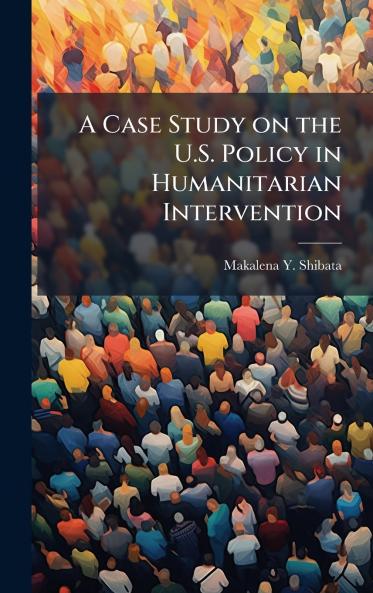
<p>In the past 16 years the U.S. has intervened militarily in approximately 20 crises ranging from feeding the Kurds in Iraq in 1990 to ousting a corrupt regime from Haiti in 2004. Given the current international security environment it is likely that the U.S. will continue to intervene militarily in non-permissive environments to provide humanitarian assistance. Therefore theU.S. must develop a current policy to address such why when and how the U.S. will participate in such operations. Analysis of case studies of humanitarian intervention (HI) in Somalia Rwanda and Liberia provides lessons learned to identify the conditions for U.S. participation and to shape the policy necessary for those participations. Although many lessons can be learned from analyzing these case studies this paper addresses only those lessons crucial to developing a coherent HI policy. Lessons include ensuring a linkage to national interests and security ensuring the HI addresses the root-cause of the conflict accepting that HI risks American lives and ensuring the appropriate allocation of national resources. Finally the paper provides six recommendations in developing a coherent HI policy.</p><p>This work has been selected by scholars as being culturally important and is part of the knowledge base of civilization as we know it. This work was reproduced from the original artifact and remains as true to the original work as possible. Therefore you will see the original copyright references library stamps (as most of these works have been housed in our most important libraries around the world) and other notations in the work.</p><p>This work is in the public domain in the United States of America and possibly other nations. Within the United States you may freely copy and distribute this work as no entity (individual or corporate) has a copyright on the body of the work.</p><p>As a reproduction of a historical artifact this work may contain missing or blurred pages poor pictures errant marks etc. Scholars believe and we concur that this work is important enough to be preserved reproduced and made generally available to the public. We appreciate your support of the preservation process and thank you for being an important part of keeping this knowledge alive and relevant.</p><br>

Piracy-free

Assured Quality

Secure Transactions

Fast Delivery

Sustainably Printed
Details
ISBN 13
9781025086477
Publication Date
-22-05-2025
Pages
-44
Weight
-170 grams
Dimensions
-156x234x6.35 mm
