

English


₹6731
₹7747
13.11% OFF
(All inclusive*)
Paperback
Delivery Options
Please enter pincode to check delivery time.
*COD & Shipping Charges may apply on certain items.
Review final details at checkout.
Looking to place a bulk order? SUBMIT DETAILS
Delivery Options
Please enter pincode to check delivery time.
*COD & Shipping Charges may apply on certain items.
Review final details at checkout.
About The Book
Description
Author
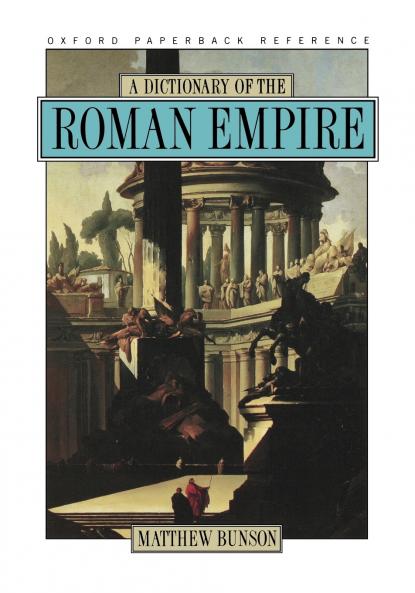
The extraordinarily rich cultural legacy of the Roman world has had a profound affect world civilization. Roman achievements in architecture law politics literature war and philosophy serve as the foundation of modern Western society. Now for the first time in an A-Z format A Dictionary of the Roman Empire assembles the people places events and ideas of this remarkable period in one easy-to-use source. With over 1900 entries covering more than five hundred years of Roman history from Julius Caesar and the Gallic Wars (59-51 B.C.) to the fall of Romulus Augustus the last Roman emperor (476 A.D.) this accessible guide provides quick reference to one of the most studied periods of all antiquity. Every aspect of Roman life is included. Here are profiles of the great emperors such as Marcus Aurelius one of the most profoundly intellectual monarchs in western civilization and the aberrant Gaius Caligula who after draining the Roman treasury with his eccentric behavior made it a capital crime for citizens not to bequeath him their estates. Informative entries describe the complex workings of Roman government such as census taking the creation of civil service coinage and the venerable institution of the Senate and offer insight into the various trends and cultural tastes that developed throughout Roman history. For example a discussion on baths the most common type of building in the Roman Empire demonstrates the unique intermingling of luxury community recreation and in the provinces an association with Rome that served as the focus of any city aspiring to greatness. Other entries describe the practice of paganism marriage and divorce ludi (public games held to entertain the Roman populace) festivals of the Roman year and gluttony (epitomized by famous gourmands such as the emperor Vitellius who according to the historian Suetonius lived for food banqueting three or four times a day routinely vomiting up his meal and starting over). Also featured are longer essays on such topics as art and architecture gods and goddesses and the military as well as a chronology a short glossary of Roman terms and appendices listing the emperors of the Empire and diagram the often intertwined family trees of ruling dynasties. Comprehensive authoritative and illustrated with over sixty illustrations and maps A Dictionary of the Roman Empire provides easy access to the remarkable civilization upon which Western society was built.

Piracy-free

Assured Quality

Secure Transactions

Fast Delivery

Sustainably Printed
Details
ISBN 13
9780195102338
Publication Date
-23-11-1995
Pages
-516
Weight
-899 grams
Dimensions
-178x254x26.36 mm
