


English
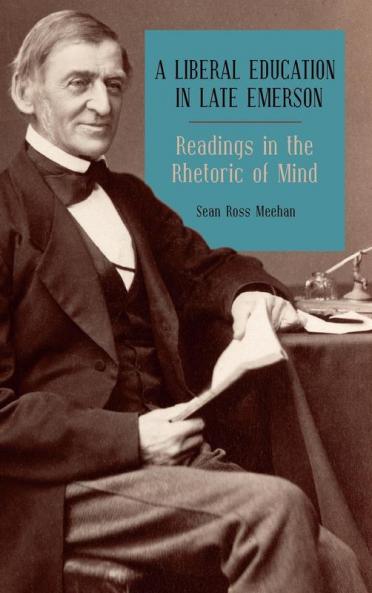



Hardback
₹6719
₹10571
36.44% OFF
(All inclusive*)
Delivery Options
Please enter pincode to check delivery time.
*COD & Shipping Charges may apply on certain items.
Review final details at checkout.
Looking to place a bulk order? SUBMIT DETAILS
Delivery Options
Please enter pincode to check delivery time.
*COD & Shipping Charges may apply on certain items.
Review final details at checkout.
About The Book
Description
Author
<p>Recent scholarship has inspired growing interest in the later work of Ralph Waldo Emerson (1803-1882) and a recognition that the conventional view of an aging Emerson distant from public matters and limited by declining mental powers needs rethinking. Sean Meehan&#39;s book reclaims three important but critically neglected aspects of the late Emerson&#39;s &quot;mind&quot;: first his engagement with rhetoric conceived as the organizing power of mind and unconventionally characterized by the trope &quot;metonymy&quot;; second his public engagement with the ideals of liberal education and debates in higher education reform early in the period (1860-1910) that saw the emergence of the modern university; and third his intellectual relation to significant figures from this age of educational transformation: Walt Whitman William James Harvard president Charles W. Eliot and W. E. B. Du Bois Harvard&#39;s first African American PhD. Meehan argues that the late Emerson educates through the &quot;rhetorical liberal arts&quot; and he thereby rethinks Emerson&#39;s influence as rhetorical lessons in the traditional pedagogy and classical curriculum of the liberal arts college. Emerson&#39;s rhetoric of mind informs and complicates these lessons since the classical ideal of a general education in the common bonds of knowledge counters the emerging American university and its specialization of thought within isolated departments.</p><p>Sean Ross Meehan is Associate Professor of English and Director of Writing Washington College Maryland.</p>

Piracy-free

Assured Quality

Secure Transactions

Fast Delivery

Sustainably Printed
Details
ISBN 13
9781640140233
Publication Date
-22-01-2019
Pages
-190
Weight
-353 grams
Dimensions
-152x229x12.7 mm
