

by
Franklin
English



Hardback
₹14959
₹19181
22.01% OFF
(All inclusive*)
Delivery Options
Please enter pincode to check delivery time.
*COD & Shipping Charges may apply on certain items.
Review final details at checkout.
Looking to place a bulk order? SUBMIT DETAILS
Delivery Options
Please enter pincode to check delivery time.
*COD & Shipping Charges may apply on certain items.
Review final details at checkout.
About The Book
Description
Author
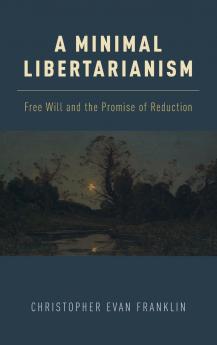
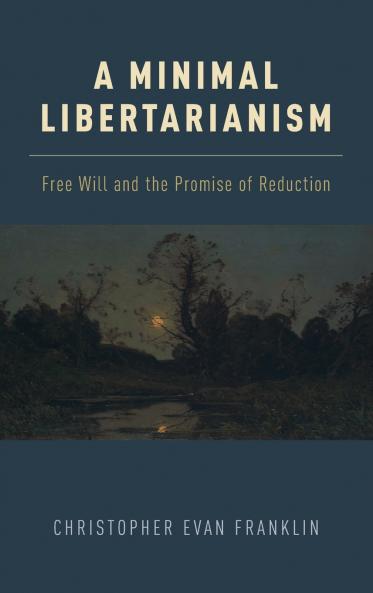
In this book Christopher Evan Franklin develops and defends a novel version of event-causal libertarianism. This view is a combination of libertarianism--the view that humans sometimes act freely and that those actions are the causal upshots of nondeterministic processes--and agency reductionism--the view that the causal role of the agent in exercises of free will is exhausted by the causal role of mental states and events (e.g. desires and beliefs) involving the agent. Franklin boldly counteracts a dominant theory that has similar aims put forth by well-known philosopher Robert Kane. Many philosophers contend that event-causal libertarians have no advantage over compatibilists when it comes to securing a distinctively valuable kind of freedom and responsibility. To Franklin this position is mistaken. Assuming agency reductionism is true event-causal libertarians need only adopt the most plausible compatibilist theory and add indeterminism at the proper juncture in the genesis of human action. The result is minimal event-causal libertarianism: a model of free will with the metaphysical simplicity of compatibilism and the intuitive power of libertarianism. And yet a worry remains: toward the end of the book Franklin reconsiders his assumption of agency reductionism arguing that this picture faces a hitherto unsolved problem. This problem however has nothing to do with indeterminism or determinism or even libertarianism or compatibilism but with how to understand the nature of the self and its role in the genesis of action. Crucially if this problem proves unsolvable then not only is event-causal libertarianism untenable so also is event-causal compatibilism.

Piracy-free

Assured Quality

Secure Transactions

Fast Delivery

Sustainably Printed
Details
ISBN 13
9780190682781
Publication Date
-21-03-2014
Pages
-248
Weight
-450 grams
Dimensions
-156x234x15.88 mm
