

English


₹2923
(All inclusive*)
Paperback
Delivery Options
Please enter pincode to check delivery time.
*COD & Shipping Charges may apply on certain items.
Review final details at checkout.
Looking to place a bulk order? SUBMIT DETAILS
Delivery Options
Please enter pincode to check delivery time.
*COD & Shipping Charges may apply on certain items.
Review final details at checkout.
About The Book
Description
Author
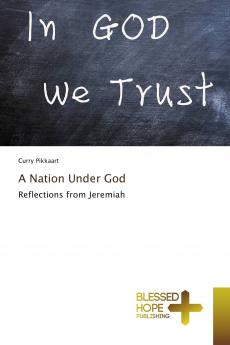
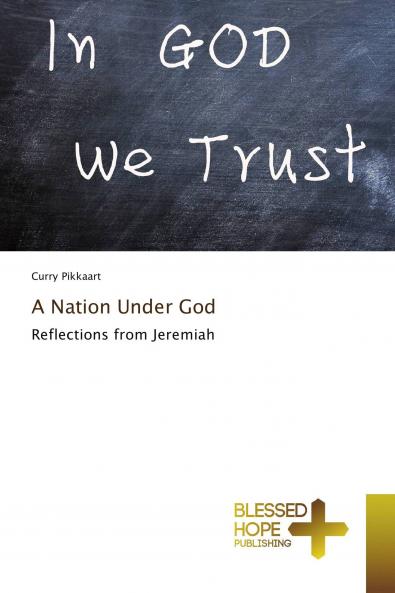
One nation under God. In the United States of America these four words – added to the pledge in 1954 – have become more than controversial. They have turned into fighting words. The two extremes of the spectrum are polar opposites – the one willing to do anything to remove the words and the other willing to do anything to prevent that from happening. And both are willing to spare no expense or experience to make themselves heard and seen. Yet underneath all the clamoring and positioning there are significant questions that are often missing from the debate – questions that must be addressed if the debate is to be based on truth rather than mere opinion or strong personal feelings or biases. What does it mean to be a nation under God? What does a nation under God look like? Why would a nation want to be under God? What are the implications of choosing to be a nation under God? What are the implications of choosing not to be a nation under God? Where can we find answers to these questions? There is a history from which we can learn some answers to the questions and discover some directions for the debate. The Bible contains the unique history of one nation – Israel – who was selected and called to be a nation under God. It only seems logical then to rediscover what this Biblical history has to say. Israel found the calling difficult and at times confusing. Sometimes she longed to live under God and sometimes she rebelled at the thought – she too experienced the polar extremes. So God gave a hard task to the prophet Jeremiah. He assigned Jeremiah – following years of Israelite rebellion and struggle – to confront the Israelites with their rebellion and to call them back to living under God’s design and rule. From Jeremiah then we can learn what being under God – living by His design and rule – is about. There are other parts of the Bible where these and similar questions are addressed but nowhere as consistently and forcefully as in Jeremiah. That’s why I have focused on his message.

Piracy-free

Assured Quality

Secure Transactions

Fast Delivery

Sustainably Printed
Details
ISBN 13
9786202477451
Publication Date
-02-03-2018
Pages
-196
Weight
-260 grams
Dimensions
-150x220x10.67 mm
