

English


₹5247
(All inclusive*)
Paperback
Delivery Options
Please enter pincode to check delivery time.
*COD & Shipping Charges may apply on certain items.
Review final details at checkout.
Looking to place a bulk order? SUBMIT DETAILS
Delivery Options
Please enter pincode to check delivery time.
*COD & Shipping Charges may apply on certain items.
Review final details at checkout.
About The Book
Description
Author
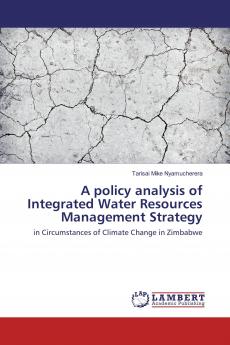
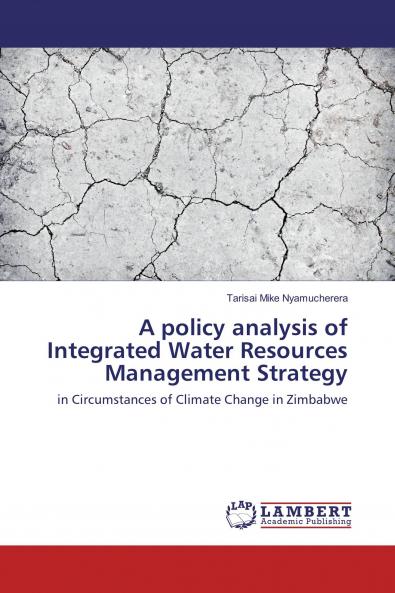
Whilst poverty has many dimensions. Lack of access to water resources for household and productive purposes is a central feature of poverty that must be reduced drastically if developing countries are to meet water related Sustainable Development Goals. When Zimbabwe introduced its water reforms they were driven by a global Integrated Water Resources Management dialogue. This study analyzed the Zimbabwe’s IWRM strategy with a view to determining how the management framework that was employed to guide the national water reforms process has performed as a policy which sought to deliver goals of social equity through water resources management. It was discovered that proponents of Integrated Water Resources Management paid insufficient attention to the political and historical dimensions of water resources management in Zimbabwe. Within this context Zimbabwe’s water reform was overlaid on top of an underlying maze of inequality of water access. The local water reforms have failed to provide for improved possibilities for more productive uses of water resources for previously marginalized water users residing in communal and resettlement areas.

Piracy-free

Assured Quality

Secure Transactions

Fast Delivery

Sustainably Printed
Details
ISBN 13
9783330075535
Publication Date
-17-05-2017
Pages
-92
Weight
-131 grams
Dimensions
-150x220x5.33 mm
