

English


Paperback
₹9436
₹11572
18.46% OFF
(All inclusive*)
Delivery Options
Please enter pincode to check delivery time.
*COD & Shipping Charges may apply on certain items.
Review final details at checkout.
Looking to place a bulk order? SUBMIT DETAILS
Delivery Options
Please enter pincode to check delivery time.
*COD & Shipping Charges may apply on certain items.
Review final details at checkout.
About The Book
Description
Author(s)
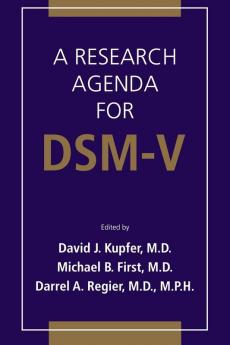
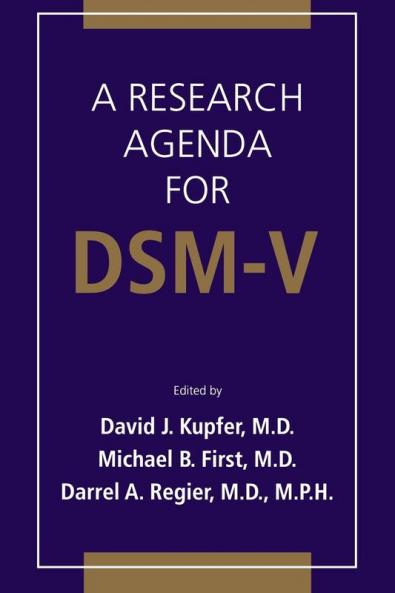
<p>In the ongoing quest to improve our psychiatric diagnostic system we are now searching for new approaches to understanding the etiological and pathophysiological mechanisms that can improve the validity of our diagnoses and the consequent power of our preventive and treatment interventions-venturing beyond the current DSM paradigm and DSM-IV framework.</p> <p>This thought-provoking volume&#8212;produced as a partnership between the American Psychiatric Association the National Institute of Mental Health the National Institute on Alcohol Abuse and Alcoholism and the National Institute on Drug Abuse&#8212;represents a far-reaching attempt to stimulate research and discussion in the field in preparation for the eventual start of the DSM-V process still several years hence. The book<br/> <br/>&#8226; Explores a variety of basic nomenclature issues including the desirability of rating the quality and quantity of information available to support the different disorders in the DSM in order to indicate the disparity of empirical support across the diagnostic system.</p> <p>&#8226; Offers a neuroscience research agenda to guide development of a pathophysiologically based classification for DSM-V which reviews genetic brain imaging postmortem and animal model research and includes strategic insights for a new research agenda.</p> <p>&#8226; Presents highlights of recent progress in developmental neuroscience genetics psychology psychopathology and epidemiology using a bioecological perspective to focus on the first two decades of life when rapid changes in behavior emotion and cognition occur.</p> <p>&#8226; Discusses how to address two important gaps in the current DSM-IV: (1) the categorical method of diagnosing personality disorders and their relationship with Axis I disorders and (2) the limited provision for the diagnosis of relational disorders&#8212;suggesting a research agenda for personality disorders that considers replacing the current categorical approach with a dimensional classification of personality.</p> <p>&#8226; Reevaluates the relationship between mental disorders and disability asserting that research into disability and impairment would benefit from the diagnosis of mental disorders be uncoupled from a requirement for impairment or disability to foster a more vigorous research agenda on the etiologies courses and treatment of mental disorders as well as disabilities and to avert unintended consequences of delayed diagnosis and treatment.</p> <p>&#8226; Examines the importance of culture in psychopathology and the main cultural variables at play in the diagnostic process stating that training present and future professionals in the need to include cultural factors in the diagnostic process is a logical step in any attempt to develop comprehensive research programs in psychology psychiatry and related disciplines. </p> <p>This fascinating work with contributions from an international group of research investigators reaches into the core of psychiatry providing invaluable background and insights for all psychology and psychiatry professionals&#8212;food for thought and further research that will be relevant for years to come.</p>

Piracy-free

Assured Quality

Secure Transactions

Fast Delivery

Sustainably Printed
Details
ISBN 13
9780890422922
Publication Date
-30-09-2002
Pages
-332
Weight
-451 grams
Dimensions
-152x229x17.6 mm
