



English


Hardback
₹1377
₹1632
15.63% OFF
(All inclusive*)
Delivery Options
Please enter pincode to check delivery time.
*COD & Shipping Charges may apply on certain items.
Review final details at checkout.
Looking to place a bulk order? SUBMIT DETAILS
Delivery Options
Please enter pincode to check delivery time.
*COD & Shipping Charges may apply on certain items.
Review final details at checkout.
About The Book
Description
Author
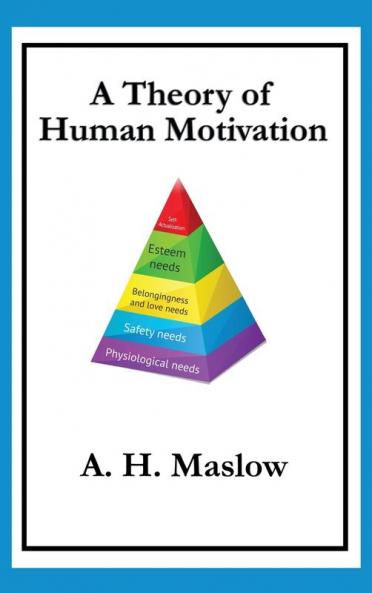
<p><strong><em>A Theory of Human Motivation</em> is Abraham H. Maslow's landmark essay on the needs that drive human behavior introducing the framework that became famous as Maslow's hierarchy of needs.</strong> Maslow argues that human motivation is organized around basic needs that press for satisfaction in a rough order: physiological needs safety love and belonging esteem and self-actualization. His central insight is simple but powerful: people are not motivated by one need alone and higher aspirations emerge most fully when more basic needs have been sufficiently met. </p><p>First published in 1943 in <em>Psychological Review</em> the essay became one of the foundational texts of humanistic psychology and one of the most widely recognized ideas in modern psychology education management counseling and personal development. Maslow's model gave later readers a way to think about survival security relationship confidence achievement creativity meaning and the desire to become what one is capable of becoming. </p><p>Readers interested in motivation psychology human potential self-actualization education leadership self-help and the intellectual roots of personal-development literature will find <em>A Theory of Human Motivation</em> essential. It is a compact work with an unusually long reach: an academic psychology paper that escaped the journal shelf and became part of the everyday language of ambition growth and human need.</p>

Piracy-free

Assured Quality

Secure Transactions

Fast Delivery

Sustainably Printed
Details
ISBN 13
9781515424963
Publication Date
-03-04-2018
Pages
-40
Weight
-157 grams
Dimensions
-152x229x6.35 mm
