

English


Paperback
₹3700
₹3895
5.01% OFF
(All inclusive*)
Delivery Options
Please enter pincode to check delivery time.
*COD & Shipping Charges may apply on certain items.
Review final details at checkout.
Looking to place a bulk order? SUBMIT DETAILS
Delivery Options
Please enter pincode to check delivery time.
*COD & Shipping Charges may apply on certain items.
Review final details at checkout.
About The Book
Description
Author
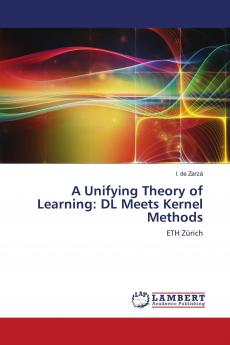
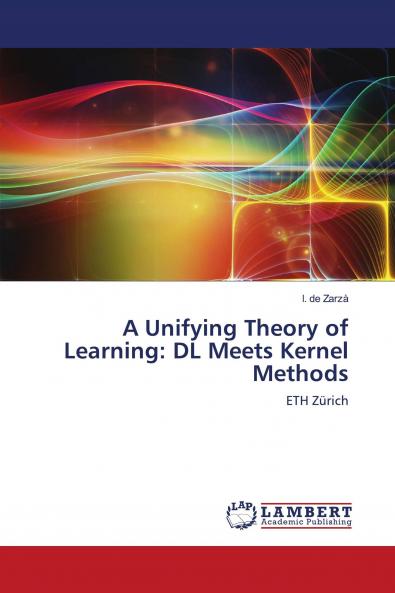
We introduce a framework to use kernel approximates in the mini-batch setting with Stochastic Gradient Descent (SGD) as an alternative to Deep Learning. Based on Random Kitchen Sinks we provide a C++ library for Large-scale ML. It contains a CPU optimized implementation of the algorithm in Le et al. 2013 that allows the computation of approximated kernel expansions in log-linear time. The algorithm requires to compute the product of matrices Walsh Hadamard. A cache friendly Fast Walsh Hadamard that achieves compelling speed and outperforms current state-of-the-art methods has been developed. McKernel establishes the foundation of a new architecture of learning that allows to obtain large-scale non-linear classification combining lightning kernel expansions and a linear classifier. It travails in the mini-batch setting working analogously to Neural Networks. We also propose a new architecture to reduce over-parametrization in Neural Networks. It introduces an operand for rapid computation in the framework of Deep Learning that leverages learned weights. The formalism is described in detail providing both an accurate elucidation of the mechanics and the theoretical implications.We introduce a framework to use kernel approximates in the mini-batch setting with Stochastic Gradient Descent (SGD) as an alternative to Deep Learning. Based on Random Kitchen Sinks we provide a C++ library for Large-scale ML. It contains a CPU optimized implementation of the algorithm in Le et al. 2013 that allows the computation of approximated kernel expansions in log-linear time. The algorithm requires to compute the product of matrices Walsh Hadamard. A cache friendly Fast Walsh Hadamard that achieves compelling speed and outperforms current state-of-the-art methods has been developed.McKernel establishes the foundation of a new architecture of learning that allows to obtain large-scale non-linear classification combining lightning kernel expansions and a linear classifier. It travails in the mini-batch setting working analogously to Neural Networks. We also propose a new architecture to reduce over-parametrization in Neural Networks. It introduces an operand for rapid computation in the framework of Deep Learning that leverages learned weights. The formalism is described in detail providing both an accurate elucidation of the mechanics and the theoretical implications.

Piracy-free

Assured Quality

Secure Transactions

Fast Delivery

Sustainably Printed
Details
ISBN 13
9786203924954
Publication Date
-21-06-2021
Pages
-108
Weight
-151 grams
Dimensions
-150x220x6.15 mm
