

by
Jakob
English


Paperback
₹2746
₹3281
16.31% OFF
(All inclusive*)
Delivery Options
Please enter pincode to check delivery time.
*COD & Shipping Charges may apply on certain items.
Review final details at checkout.
Looking to place a bulk order? SUBMIT DETAILS
Delivery Options
Please enter pincode to check delivery time.
*COD & Shipping Charges may apply on certain items.
Review final details at checkout.
About The Book
Description
Author
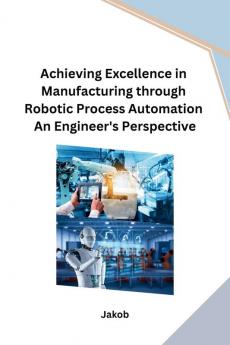
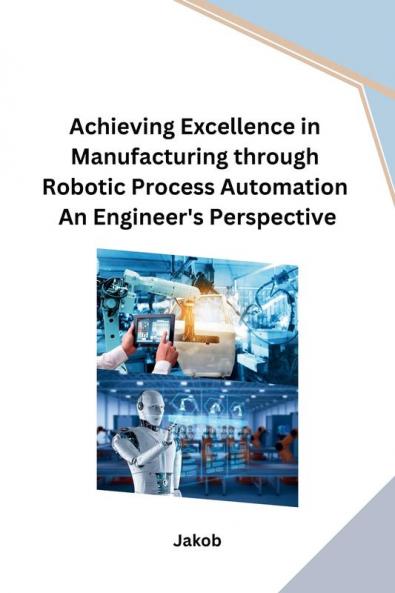
<p>Automation has revolutionized the manufacturing industry allowing companies to streamline their processes improve productivity and achieve higher levels of efficiency. In recent years the concept of Robotic Process Automation (RPA) has gained significant traction offering engineers a powerful tool to achieve excellence in manufacturing.</p><p>RPA involves the use of software robots or bots to automate repetitive and rule-based tasks within a manufacturing process. These bots can perform a wide range of activities such as data entry inventory management quality control and even complex decision-making processes. By taking over these tasks RPA frees up human workers to focus on more value-added activities such as innovation problem-solving and customer interaction.</p><p>One of the key benefits of RPA in manufacturing is its ability to enhance accuracy and precision. Unlike humans robots do not suffer from fatigue distractions or errors due to inconsistencies in performing repetitive tasks. This not only ensures consistent quality in products but also minimizes the risk of defects and rework ultimately saving time and costs.</p><p>Moreover RPA enables manufacturers to achieve higher levels of productivity and efficiency. Bots can work 24/7 without breaks leading to increased output and reduced cycle times. They can also handle multiple tasks simultaneously enabling parallel processing and eliminating bottlenecks in the production line. As a result manufacturers can meet customer demands faster reduce lead times and gain a competitive edge in the market.</p><p>Additionally RPA promotes flexibility and adaptability in manufacturing processes. With the ability to reprogram and reconfigure bots engineers can easily modify production lines to accommodate changes in product design volume or customer requirements. This agility allows manufacturers to respond quickly to market fluctuations optimize resource allocation and improve overall operational performance.</p><p>However it is important for engineers to understand that RPA is not a replacement for human workers but rather a tool to augment their capabilities. While robots can perform repetitive tasks with precision they lack the creativity problem-solving skills and emotional intelligence that humans possess. Therefore it is crucial for engineers to identify the right balance between human and robotic involvement in manufacturing processes ensuring that humans are still at the forefront of critical decision-making and complex problem-solving tasks.</p>

Piracy-free

Assured Quality

Secure Transactions

Fast Delivery

Sustainably Printed
Details
ISBN 13
9798869048936
Publication Date
-05-12-2023
Pages
-98
Weight
-145 grams
Dimensions
-152x229x5.16 mm
