



English





Hardback
₹14653
₹22007
33.42% OFF
(All inclusive*)
Delivery Options
Please enter pincode to check delivery time.
*COD & Shipping Charges may apply on certain items.
Review final details at checkout.
Looking to place a bulk order? SUBMIT DETAILS
Delivery Options
Please enter pincode to check delivery time.
*COD & Shipping Charges may apply on certain items.
Review final details at checkout.
About The Book
Description
Author
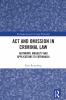
<p>This book offers an innovative perspective on the critical distinction between acts and omissions in criminal law a distinction that runs like a defining thread through all types of criminal offenses.</p><p>While any act that positively causes a prohibited harm is sufficient for a conviction an omission that causes the very same harm warrants a conviction only when there is a legal duty to act. This fundamental distinction between acts and omissions is not just relevant to criminal law but it is also deeply rooted in our moral thinking. Thus it is commonly argued that the difference between acts and omissions is also applicable to the intuitive moral distinction between active euthanasia forbidden in most countries and passive euthanasia permitted in many countries under certain circumstances. Hence the significance of this book is threefold: First it offers a comprehensive coherent and systematic discussion of the intersections between the philosophical-moral and the legal-criminal aspects of this fundamental topic. Second it offers a novel rationale for the distinction between acts and omissions based on the principle of autonomy. Finally it demonstrates the influences of the theoretical discussion on the most significant practical questions.</p><p>This book will be of interest to researchers academics and policy-makers working in the areas of criminal law moral philosophy and bioethics.</p>

Piracy-free

Assured Quality

Secure Transactions

Fast Delivery

Sustainably Printed
Details
ISBN 13
9781032461731
Publication Date
-30-08-2024
Pages
-196
Weight
-379 grams
Dimensions
-156x234x12.07 mm
