


English


₹9028
₹10569
14.58% OFF
(All inclusive*)
Paperback
Delivery Options
Please enter pincode to check delivery time.
*COD & Shipping Charges may apply on certain items.
Review final details at checkout.
Looking to place a bulk order? SUBMIT DETAILS
Delivery Options
Please enter pincode to check delivery time.
*COD & Shipping Charges may apply on certain items.
Review final details at checkout.
About The Book
Description
Author
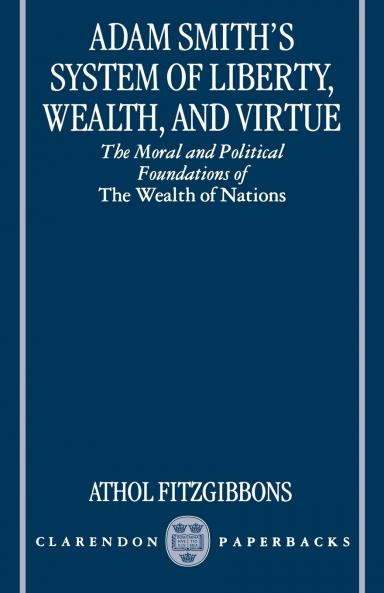
This book examines the influence that Adam Smith''s philosophy had on his economics drawing on the neglected parts of Smith''s writings to show that the political and economic theories built logically on his morals. It analyses the significance of his stoic beliefs his notions of art and music astronomy philosophy and war and shows that Smith''s invisible hand was part of a `system'' that was meant to replace medieval Christianity with an ethic of virtue in this world rather than the next. Smith was motivated primarily by a political ideal a moral version of liberalism. He rejected the political philosophy of the Greeks and Christians as authoritarian and unworldly but contrary to what many economists believe he also rejected the amoral liberalism that was being advocated by his countryman and friend David Hume. Far from being myopic about self-love Smith arrived at his theories of free trade economic growth and alienation via his reinterpretation of Stoic virtue. Athol Fitzgibbons'' account is clearly written and its innovations reveal the hitherto hidden unity in Smith''s overarching system of morals politics and economics.

Piracy-free

Assured Quality

Secure Transactions

Fast Delivery

Sustainably Printed
Details
ISBN 13
9780198292883
Publication Date
-13-11-1997
Pages
-224
Weight
-269 grams
Dimensions
-140x216x12.97 mm
