


English




Paperback
₹4805
₹6269
23.35% OFF
(All inclusive*)
Delivery Options
Please enter pincode to check delivery time.
*COD & Shipping Charges may apply on certain items.
Review final details at checkout.
Looking to place a bulk order? SUBMIT DETAILS
Delivery Options
Please enter pincode to check delivery time.
*COD & Shipping Charges may apply on certain items.
Review final details at checkout.
About The Book
Description
Author
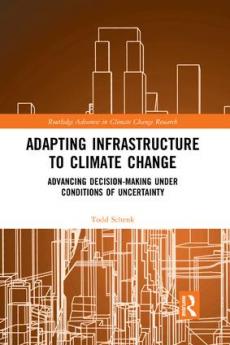
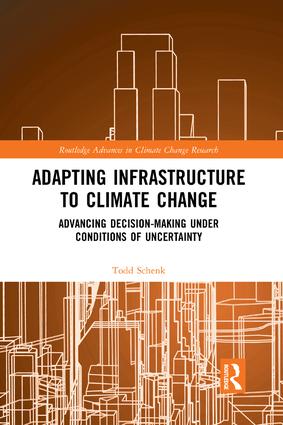
<p>Many of the challenges that decision-makers grapple with in relation to climate change are governance related. Planning and decision-making is evolving in ambiguous institutional environments in which many key issues remain unresolved including relationships between different actors; funding arrangements; and the sources and procedures for vetting data. These issues are particularly acute at this juncture as climate adaptation moves from broad planning processes to the management of infrastructure systems. Concrete decisions must be made.</p><p>Adapting Infrastructure to Climate Change draws on case studies of three coastal cities situated within very different governance regimes: neo-corporatist Rotterdam neo-pluralist Boston and semi-authoritarian Singapore. The book examines how infrastructure managers and other stakeholders grappling with complex and uncertain climate risks are likely to make project-level decisions in practice and how more effective decision-making can be supported. The differences across governance regimes are currently unaccounted for in adaptation planning but are crucial as best practices are devised. These lessons are also applicable to infrastructure planning and decision-making in other contexts.</p><p>This book will be of great interest to scholars of climate change and environmental policy and governance particularly in the context of infrastructure management.</p>

Piracy-free

Assured Quality

Secure Transactions
Details
ISBN 13
9780367192976
Publication Date
-08-01-2019
Pages
-264
Weight
-380 grams
Dimensions
-155.96x233.93x14.16 mm
