



₹5745
₹7576
24.17% OFF
(All inclusive*)
Paperback
Delivery Options
Please enter pincode to check delivery time.
*COD & Shipping Charges may apply on certain items.
Review final details at checkout.
Looking to place a bulk order? SUBMIT DETAILS
Delivery Options
Please enter pincode to check delivery time.
*COD & Shipping Charges may apply on certain items.
Review final details at checkout.
About The Book
Description
Author(s)
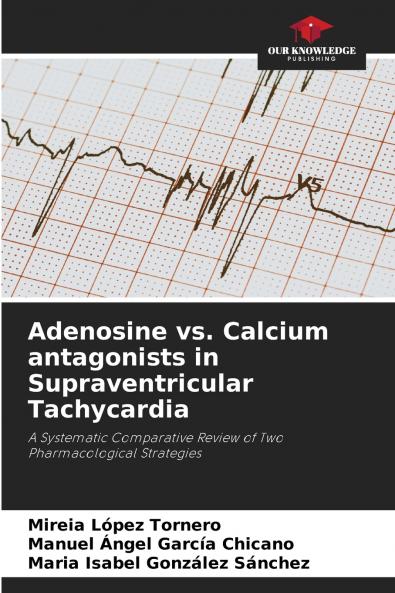
Adenosine and calcium antagonists demonstrate equivalent efficacy in the conversion of stable supraventricular tachycardia (SVT) to sinus rhythm. The choice between them is not based on success rate but on their different safety and pharmacokinetic profiles. Adenosine is the first-line drug recommended by clinical guidelines due to its ultra-short half-life of less than 10 seconds which ensures that its common adverse effects (chest pain dyspnea) are extremely brief and self-limiting. Its action is almost immediate causing a transient block of the AV node that effectively interrupts the arrhythmia circuit. On the other hand verapamil has a slower onset of action and a prolonged duration of effect. Its main risk is hypotension which may be sustained and require additional management. Therefore it is considered a second-line alternative ideal for patients in whom adenosine is contraindicated or has proven ineffective. In conclusion the preference for adenosine is due to its superior safety profile not to greater efficacy consolidating it as the most prudent option for most patients.

Piracy-free

Assured Quality

Secure Transactions

Fast Delivery

Sustainably Printed
Details
ISBN 13
9786209330674
Publication Date
-09-12-2025
Pages
-52
Weight
-85 grams
Dimensions
-152x229x3.16 mm
