


English



₹4061
₹4737
14.27% OFF
(All inclusive*)
Paperback
Delivery Options
Please enter pincode to check delivery time.
*COD & Shipping Charges may apply on certain items.
Review final details at checkout.
Looking to place a bulk order? SUBMIT DETAILS
Delivery Options
Please enter pincode to check delivery time.
*COD & Shipping Charges may apply on certain items.
Review final details at checkout.
About The Book
Description
Author(s)
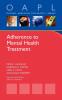
Patients'' failure to complete a simple prescription course presents a tremendous public health problem and a considerable challenge for practicing clinicians. For those with chronic mental illnesses non-adherence is an even greater problem than in other patient populations and substantially lowers the possibility of improvement or recovery. Additionally adherence to treatment is further undermined by impairments in insight that often accompany mental illness. Much has been written about non-adherence across medical specialties. Yet the topic of non-adherence in psychiatric patients is so common and complex that it merits review in its own right. Using the most up-to-date research available this book summarizes the current knowledge concerning non-adherence in mental illness presenting concise practical information on such topics as the reasons behind medication non-adherence detection of non-adherence and the pharmacological and non-pharmacological options available to clinicians to manage non-adherence. The authors review the effectiveness of psycho-education brief counseling compliance therapy cognitive adaptive strategies reminder electronic monitoring strategies family therapy peer support and recovery and assertive community treatment (ACT) as well as assess the legal issues around patient adherence including outpatient commitment and Kendra''s law. Importantly the text also addresses the ever evolving role of psychiatrists in managing adherence focusing on the rapid advances in pharmacology in light of the new and broadening recovery concept for mental illness. The data is presented in a ready-to-use manner utilizing algorithms diagrams tables and figures to convey helpful information to clinicians in order to improve all aspects of psychiatric patient adherence.

Piracy-free

Assured Quality

Secure Transactions

Fast Delivery

Sustainably Printed
Details
ISBN 13
9780195384338
Publication Date
-08-12-2009
Pages
-128
Weight
-137 grams
Dimensions
-127x203x6.93 mm
