

English


Paperback
₹6409
₹7552
15.14% OFF
(All inclusive*)
Delivery Options
Please enter pincode to check delivery time.
*COD & Shipping Charges may apply on certain items.
Review final details at checkout.
Looking to place a bulk order? SUBMIT DETAILS
Delivery Options
Please enter pincode to check delivery time.
*COD & Shipping Charges may apply on certain items.
Review final details at checkout.
About The Book
Description
Author
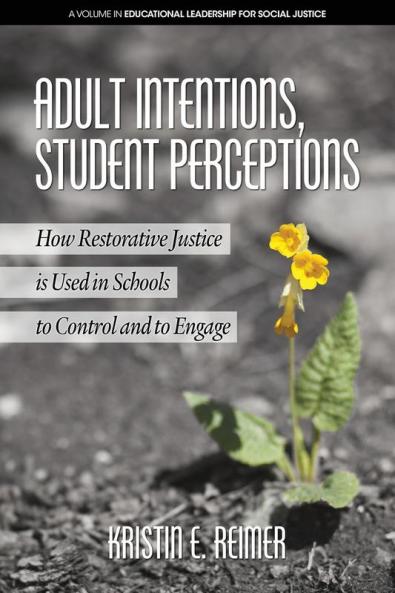
<p>Restorative justice (RJ) is an idea whose time may have finally arrived. Although the concept has ancient roots and the term has existed in Western societies since the 1970s only recently has it gained general public recognition. In schools RJ&rsquo;s popularity is rising world-wide. In fact education is the fastest growing area for the practice of RJ.&nbsp;</p><p>Despite an increasing number of schools embracing the approach it is not clear what educational RJ practitioners are trying to achieve. <em>Adult Intentions Student Perceptions: How Restorative Justice is Used in Schools to Control and to Engage</em> focuses on the use of RJ in one school in Scotland and one in Canada. While important to understand the intentions of educators in using RJ in schools those aims must be examined alongside the actual impact that such practices have on students. RJ can be understood and experienced in dramatically different ways by those implementing it. For some RJ is about creating an environment of and for student engagement that challenges traditional systems of discipline and facilitates learning. For others RJ is simply another tool for solidifying compliance and meting out punishment albeit in a kinder gentler way. <em>Adult Intentions Student Perceptions</em> provides the opportunity to delve deeply into the stories of two schools and the adults and young people who inhabit them and consider the broad impact that differing educator understandings of RJ have on students.</p><p><em>Adult Intentions Student Perceptions </em>is a timely book for RJ advocates and critics alike. It challenges a common assumption of some RJ advocates that implementing RJ necessarily creates a classroom environment of social engagement (where students are empowered to engage with one another and think critically and school relationships and hierarchies are transformed). The student experience relayed in this book shows that RJ can as readily be mobilized to create classroom environments of social control (where students are taught obedience and compliance and authority and hierarchy are reinforced). Reimer argues that RJ by itself does not guarantee certain qualities of relationship but RJ does allow us to examine relational qualities and ask questions of how school relationships are used to engage and/or control students.</p><p>&nbsp;</p>

Piracy-free

Assured Quality

Secure Transactions

Fast Delivery

Sustainably Printed
Details
ISBN 13
9781641135047
Publication Date
-19-11-2018
Pages
-206
Weight
-300 grams
Dimensions
-156x234x11.07 mm
