

English


Hardback
₹8601
(All inclusive*)
Delivery Options
Please enter pincode to check delivery time.
*COD & Shipping Charges may apply on certain items.
Review final details at checkout.
Looking to place a bulk order? SUBMIT DETAILS
Delivery Options
Please enter pincode to check delivery time.
*COD & Shipping Charges may apply on certain items.
Review final details at checkout.
About The Book
Description
Author(s)
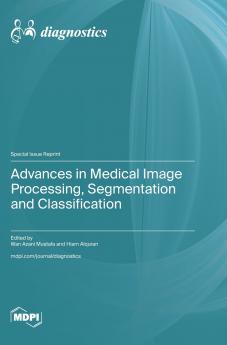
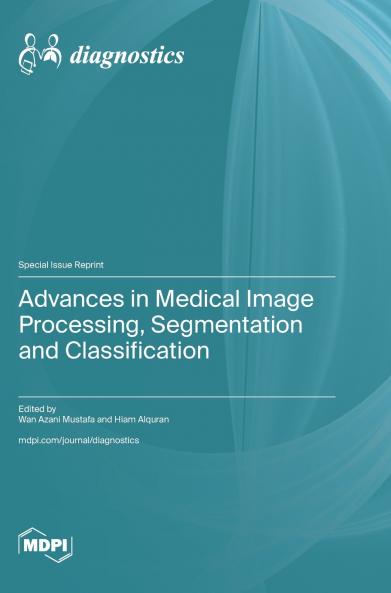
<p>Medical data typically include physiological signals diagnostic images and treatment histories offering essential insights into patient conditions and outcomes. Computer-aided diagnosis (CAD) systems-used for detection segmentation and classification-are now key components of clinical workflows. These systems apply image processing techniques to ensure accurate analysis across CT MRI X-ray and ultrasound scans. Artificial intelligence (AI) especially machine learning and deep learning has further advanced CAD by enabling automated accurate disease detection. Yet the success of such models depends on large annotated datasets and expertise in preprocessing modeling and validation. AI-driven CAD systems have shown strong potential in diverse clinical settings. Future work should prioritize multi-center data sharing federated learning few-shot learning and explainable AI to enhance reliability and adaptability. Integrating AI with technologies like the Internet of Medical Things (IoMT) opens doors to real-time scalable diagnostics. With continued innovation and rigorous validation AI is set to become an essential part of clinical decision-making. This volume presents cutting-edge research and strategies to address current gaps aiming to improve patient outcomes and advance global healthcare systems.</p>

Piracy-free

Assured Quality

Secure Transactions

Fast Delivery

Sustainably Printed
Details
ISBN 13
9783725841233
Publication Date
-23-06-2025
Pages
-278
Weight
-558 grams
Dimensions
-170x244x22.23 mm
