


English



Paperback
₹4731
₹5687
16.81% OFF
(All inclusive*)
Delivery Options
Please enter pincode to check delivery time.
*COD & Shipping Charges may apply on certain items.
Review final details at checkout.
Looking to place a bulk order? SUBMIT DETAILS
Delivery Options
Please enter pincode to check delivery time.
*COD & Shipping Charges may apply on certain items.
Review final details at checkout.
About The Book
Description
Author
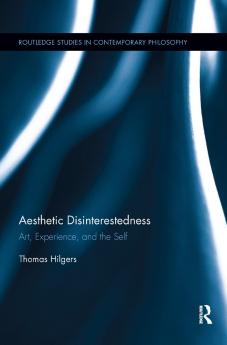
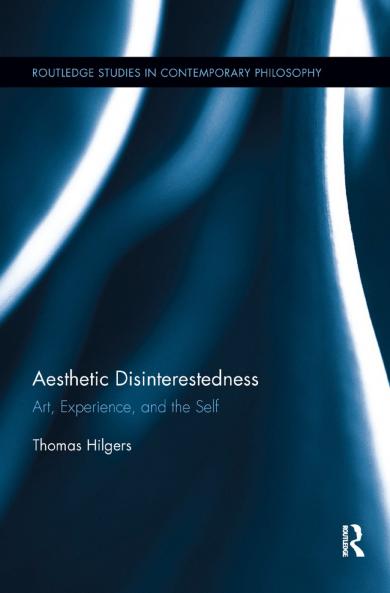
<p>The notion of disinterestedness is often conceived of as antiquated or ideological. In spite of this Hilgers argues that one cannot reject it if one wishes to understand the nature of art. He claims that an artwork typically <i>asks</i> a person to adopt a disinterested attitude towards what it shows and that the effect of such an adoption is that it makes the person temporarily <i>lose the sense of herself</i> while enabling her to <i>gain a sense of the other</i>. Due to an artwork’s particular wealth multiperspectivity and dialecticity the engagement with it cannot culminate in the construction of world-views but must initiate a process of self-critical thinking which is a precondition of real self-determination. Ultimately then the aesthetic experience of art consists of a dynamic process of <i>losing the sense of oneself</i> while <i>gaining a sense of the other</i> and of <i>achieving selfhood</i>. In his book Hilgers spells out the nature of this process by means of rethinking Kant’s and Schopenhauer’s aesthetic theories in light of more recent developments in philosophy–specifically in hermeneutics critical theory and analytic philosophy–and within the arts themselves–specifically within film and performance art.</p>

Piracy-free

Assured Quality

Secure Transactions
Details
ISBN 13
9780367361495
Publication Date
-05-09-2019
Pages
-200
Weight
-278 grams
Dimensions
-151.89x229.11x10.88 mm
