

English


Paperback
₹4903
₹6286
22% OFF
(All inclusive*)
Delivery Options
Please enter pincode to check delivery time.
*COD & Shipping Charges may apply on certain items.
Review final details at checkout.
Looking to place a bulk order? SUBMIT DETAILS

Piracy-free

Assured Quality

Secure Transactions
About The Book
Description
Author
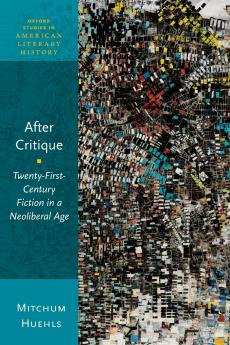
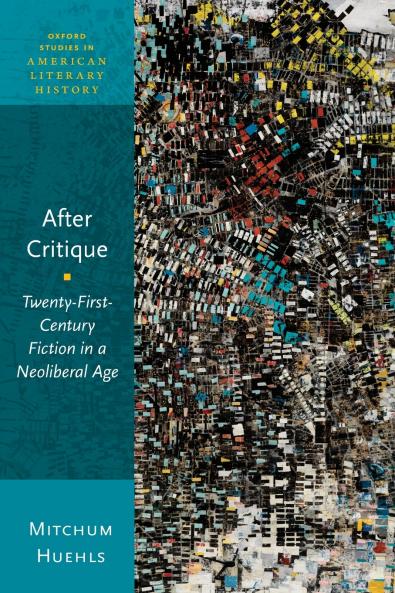
<p>Periodizing contemporary fiction against the backdrop of neoliberalism <em>After Critique </em>identifies a notable turn away from progressive politics among a cadre of key twenty-first-century authors. Through authoritative readings of foundational texts from writers such as Percival Everett Helena Viramontes Uzodinma Iweala Colson Whitehead Tom McCarthy and David Foster Wallace Huehls charts a distinct move away from standard forms of political critique grounded in rights discourse ideological demystification and the identification of injustice and inequality.</p><p>The authors discussed in <em>After Critique</em> register the decline of a conventional leftist politics and in many ways even capitulate to its demise. As Huehls explains however such capitulation should actually be understood as contemporary U.S. fiction&#39;s concerted attempt to reconfigure the nature of politics from within the neoliberal beast. While it&#39;s easy to dismiss this as post-ideological fantasy Huehls draws on an array of diverse scholarship--most notably the work of Bruno Latour--to suggest that an entirely new form of politics is emerging both because of and in response to neoliberalism. Arguing that we must stop thinking of neoliberalism as a set of norms ideological beliefs or market principles that can be countered with a more just set of norms beliefs and principles Huehls instead insists that we must start to appreciate neoliberalism as a post-normative ontological phenomenon. That is it&#39;s not something that requires us to think or act a certain way; it&#39;s something that requires us to be in and occupy space in a certain way. This provocative treatment of neoliberalism in turn allows <em>After Critique</em> to reimagine our understanding of contemporary fiction and the political possibilities it envisions.</p>
Piracy-free
Assured Quality
Secure Transactions
Delivery Options
Please enter pincode to check delivery time.
*COD & Shipping Charges may apply on certain items.
Review final details at checkout.
Details
ISBN 13
9780190067830
Publication Date
-01-09-2019
Pages
-236
Weight
-342 grams
Dimensions
-156x234x13.63 mm
