

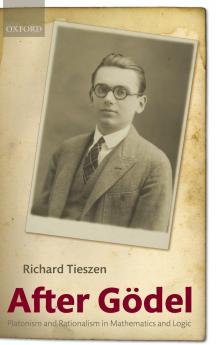
English
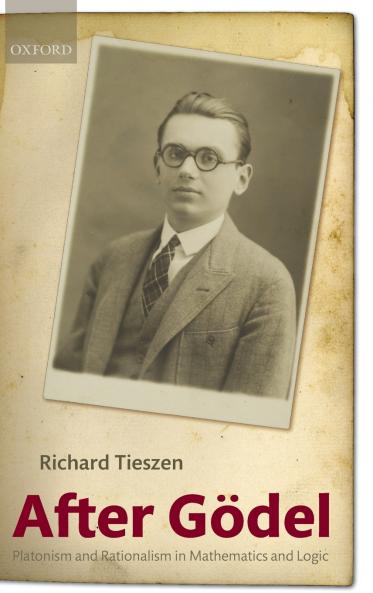


Hardback
₹16389
(All inclusive*)
Delivery Options
Please enter pincode to check delivery time.
*COD & Shipping Charges may apply on certain items.
Review final details at checkout.
Looking to place a bulk order? SUBMIT DETAILS

Piracy-free

Assured Quality

Secure Transactions
About The Book
Description
Author
Richard Tieszen presents an analysis development and defense of a number of central ideas in Kurt Gödel''s writings on the philosophy and foundations of mathematics and logic. Tieszen structures the argument around Gödel''s three philosophical heroes - Plato Leibniz and Husserl - and his engagement with Kant and supplements close readings of Gödel''s texts on foundations with materials from Gödel''s Nachlass and from Hao Wang''s discussions with Gödel. As well as providing discussions of Gödel''s views on the philosophical significance of his technical results on completeness incompleteness undecidability consistency proofs speed-up theorems and independence proofs Tieszen furnishes a detailed analysis of Gödel''s critique of Hilbert and Carnap and of his subsequent turn to Husserl''s transcendental philosophy in 1959. On this basis a new type of platonic rationalism that requires rational intuition called ''constituted platonism'' is developed and defended. Tieszen shows how constituted platonism addresses the problem of the objectivity of mathematics and of the knowledge of abstract mathematical objects. Finally he considers the implications of this position for the claim that human minds (''monads'') are machines and discusses the issues of pragmatic holism and rationalism.
Piracy-free
Assured Quality
Secure Transactions
Delivery Options
Please enter pincode to check delivery time.
*COD & Shipping Charges may apply on certain items.
Review final details at checkout.
Details
ISBN 13
9780199606207
Publication Date
-01-06-2011
Pages
-258
Weight
-464 grams
Dimensions
-156x234x15.88 mm
