

English


Hardback
₹10756
(All inclusive*)
Delivery Options
Please enter pincode to check delivery time.
*COD & Shipping Charges may apply on certain items.
Review final details at checkout.
Looking to place a bulk order? SUBMIT DETAILS
Delivery Options
Please enter pincode to check delivery time.
*COD & Shipping Charges may apply on certain items.
Review final details at checkout.
About The Book
Description
Author(s)
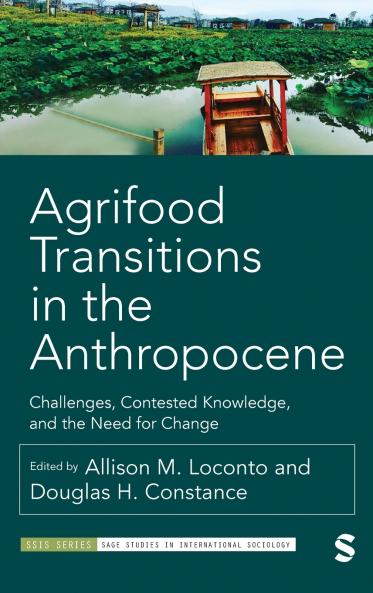
The greatest challenges of the twenty-first century stem from the fact that we are now living in a new epoch: the Anthropocene. The human footprint on the planet can no longer be denied. One of the greatest and most essential human innovations agriculture is being increasingly recognised as a leading contributor to climate change. According to global governance bodies the world will need to feed a predicted nine billion people by 2050. However in this Anthropocene we must address the environmental inequalities in how these people will be fed. This book explores our current societal struggles to transition towards more sustainable agrifood systems. It suggests that debates around sustainable agriculture must be social as well as technical exploring the growth of social movements campaigning for more democratic food systems. However as each chapter demonstrates both the problems and the solutions in sustainable agriculture are highly contested. Using the term ′agrifood′ to capture the nexus between research governance and the environment knowledge-environment-governance this book provides an in-depth and wide-ranging account of current research around agricultural production and food consumption. The book introduces the Anthropocene along with the fundamental question that it poses about human-nature interactions. It outlines the core concerns related to agriculture and food and the debates around the need for agrifood system transitions. Each chapter investigates controversies in the field through case studies. These contributions offer a call for sociologists of agriculture and food to engage with the controversies unfolding in the Anthropocene.

Piracy-free

Assured Quality

Secure Transactions

Fast Delivery

Sustainably Printed
Details
ISBN 13
9781529680157
Publication Date
-05-02-2024
Pages
-416
Weight
-680 grams
Dimensions
-156x234x23.81 mm
