

English


Paperback
₹7351
(All inclusive*)
Delivery Options
Please enter pincode to check delivery time.
*COD & Shipping Charges may apply on certain items.
Review final details at checkout.
Looking to place a bulk order? SUBMIT DETAILS

Piracy-free

Assured Quality

Secure Transactions
About The Book
Description
Author
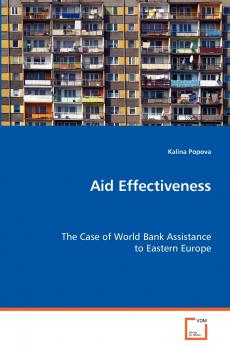
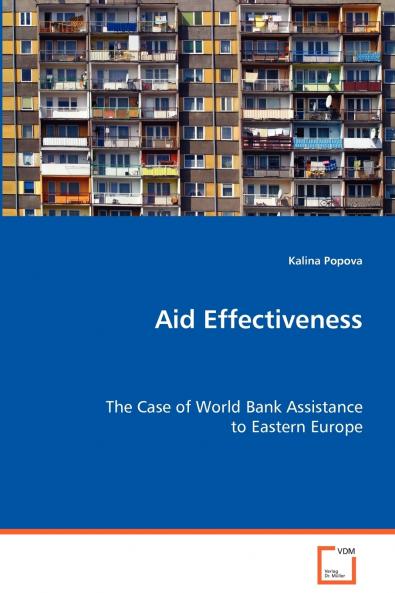
Since the success of the Marshall Plan in the economic recovery of Western Europe after WWII foreign aid has been an important tool of foreign policy. Yet there are increasing doubts about the effectiveness of the aid effort. Critics argue that aid is targeted to wasteful regimes and to countries where the environment is not conducive to growth. This book examines aid effectiveness by asking what determines which countries receive aid and how much and what considerations dominate the donors' and the recipients' decision processes. The focus is on World Bank lending to Eastern Europe and the donor-recipient relations are presented in a principal-agent framework. Both donors and recipients choose to enter into an aid relationship and the motivations behind these decisions have implications for the effectiveness of aid. The theoretical hypotheses are tested in an empirical model and two case studies. The analysis shows that World Bank involvement has contributed to economic growth in Eastern Europe but both the Bank and recipient countries face constraints that limit their ability to meet their commitments and this in turn limits the effectiveness of aid.
Piracy-free
Assured Quality
Secure Transactions
Delivery Options
Please enter pincode to check delivery time.
*COD & Shipping Charges may apply on certain items.
Review final details at checkout.
Details
ISBN 13
9783639072440
Publication Date
-03-09-2008
Pages
-172
Weight
-242 grams
Dimensions
-150x220x9.44 mm
