

English


Paperback
₹1836
₹2065
11.09% OFF
(All inclusive*)
Delivery Options
Please enter pincode to check delivery time.
*COD & Shipping Charges may apply on certain items.
Review final details at checkout.
Looking to place a bulk order? SUBMIT DETAILS
Delivery Options
Please enter pincode to check delivery time.
*COD & Shipping Charges may apply on certain items.
Review final details at checkout.
About The Book
Description
Author
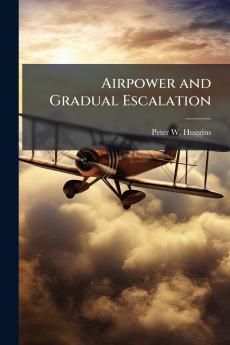
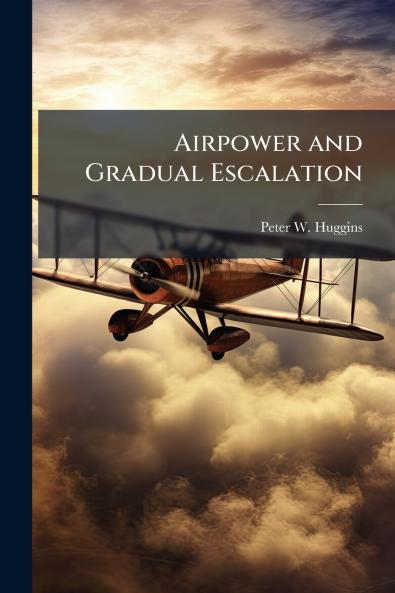
<p>This study reexamines the concept of gradualism. Written off as an unworkable concept after the Vietnam War gradualism worked in NATO's recently completed Operation Allied Force. Since it is reasonable to believe that national decision makers and military commanders may have to conduct another graduated air operation in the future this study examines what conditions must be fulfilled or avoided to maximize the chances for a successful graduated air campaign. Since most contemporary strategists do not fully understand the components of gradualism the study begins by deriving from the writings of Thomas C. Schelling perhaps the best-known theorist of gradualism a definition and theoretical propositions for gradualism. The conclusion from this is that bargaining and communication between the two adversaries a well-coordinated effort between the military and diplomatic instruments of power and an intensive and extensive understanding of one's adversary are all key facets of gradualism. Following the theory is a theoretical critique of gradualism comparing it to the principles of Clausewitz to the ideas of several airpower theorists including John Boyd and John Warden's theories of strategic paralysis and to the theoretical and empirical lessons of the psychological impact of air attack. This suggests that the key tenets of gradualism are explicitly contrary to the theoretical underpinnings of the way western nations conduct warfare. The second part of the critique analyzes the application of graduated airpower during Operation Rolling Thunder 1965-68 as well as exploring two other graduated campaigns: the Egyptian-Israeli War of Attrition 1969-70 and NATO's Operation Deny Flight/Deliberate Force 1992-95.</p><p>This work has been selected by scholars as being culturally important and is part of the knowledge base of civilization as we know it. This work was reproduced from the original artifact and remains as true to the original work as possible. Therefore you will see the original copyright references library stamps (as most of these works have been housed in our most important libraries around the world) and other notations in the work.</p><p>This work is in the public domain in the United States of America and possibly other nations. Within the United States you may freely copy and distribute this work as no entity (individual or corporate) has a copyright on the body of the work.</p><p>As a reproduction of a historical artifact this work may contain missing or blurred pages poor pictures errant marks etc. Scholars believe and we concur that this work is important enough to be preserved reproduced and made generally available to the public. We appreciate your support of the preservation process and thank you for being an important part of keeping this knowledge alive and relevant.</p>

Piracy-free

Assured Quality

Secure Transactions

Fast Delivery

Sustainably Printed
Details
ISBN 13
9781288415687
Publication Date
-07-12-2012
Pages
-150
Weight
-224 grams
Dimensions
-156x234x8.27 mm
