

English


₹3344
(All inclusive*)
Hardback
Delivery Options
Please enter pincode to check delivery time.
*COD & Shipping Charges may apply on certain items.
Review final details at checkout.
Looking to place a bulk order? SUBMIT DETAILS
Delivery Options
Please enter pincode to check delivery time.
*COD & Shipping Charges may apply on certain items.
Review final details at checkout.
About The Book
Description
Author(s)
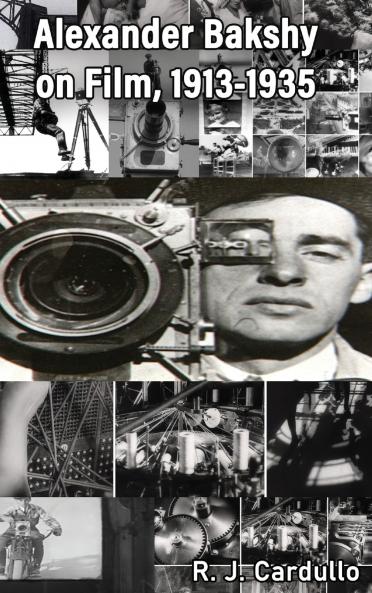
<p class=ql-align-justify><strong>Alexander Bakshy (1885-1949)</strong> was the first movie critic for the <em>Nation</em> (1927-33) as well as one of America's first full-time professional film critics. He was known during his lifetime for his prescience as he stood up for the future of sound cinema in 1929. Bakshy was thus one of the more progressive cultural critics of the years between the world wars one who did his part in easing the movies toward acceptance as an art form. He was also an innovative theorist (again one of America's first) who applied to cinema the discourse of self-reflexive modernism prizing anti-illusionist medium-awareness. </p><p class=ql-align-justify>In <em>Alexander Bakshy on Film 1913-1935</em>-the only such collection by Bakshy-the reader gets thoughtful commentary on such important films as Chaplin's <em>City Lights</em> Eisenstein's<em> Ten Days That Shook the World</em> Dreyer's <em>The Passion of Joan of Arc</em> Clair's <em>Sous les toits de Paris</em> Pabst's <em>Kameradschaft</em> Kinugasa's <em>Slums of Tokyo</em> Lubitsch's <em>Trouble in Paradise</em> Dovzhenko's <em>Earth</em> and Milestone's <em>All Quiet on the Western Front</em>; and penetrating insight into such significant directors as Alfred Hitchcock Frank Capra Jean Renoir F. W. Murnau George Cukor Vsevolod Pudovkin and Howard Hawks. The reader is also treated in <em>Alexander Bakshy on Film 1913-1935</em> to evidence of Bakshy's penchant for theoretizing in essays on film acting experimental or art-house movie theaters and sound vs. silent cinema. </p><p class=ql-align-justify><span style=color: rgba(0 0 0 1)>Indeed this collection of film criticism is one of the few to embrace both the silent and sound periods (along with the black-and-white and color eras) and it is the only collection of film criticism by an early critic of the medium that embraces a fully modernist perspective. In </span><em>Alexander Bakshy on Film 1913-1935</em><em> </em><span style=color: rgba(0 0 0 1)>Bakshy's </span>work thus finally receives some of the attention it deserves attention heretofore reserved for other early American movie critics such as James Agee-who himself began writing reviews for the<em> Nation</em> in 1942.</p><p class=ql-align-justify>&nbsp;</p><p class=ql-align-justify><strong>R. J. Cardullo</strong> was the regular film critic for the <em>Hudson Review</em> in New York City from 1987 to 2007; prior to and during the same period he taught for four decades at the University of Michigan Colgate Wesleyan and New York University. Cardullo is the author editor or translator of a number of books including for this press <em>Bruce Beresford on Film</em> (2022); <em>Film Analysis: A Casebook </em>(John Wiley 2015); <em>Soundings on Cinema: Speaking to Film and Film Artists</em> (SUNY Press 2008); <em>In Search of Cinema: Writings on International Film Art</em> (McGill-Queens UP 2004); and <em>Bazin at Work: Major Essays &amp; Reviews from the '40s &amp; '50s</em> (Routledge 1997). Educated at Tulane and Yale he now lives in Finland with his wife and Bertie the mixed terrier.</p><p><br></p>

Piracy-free

Assured Quality

Secure Transactions

Fast Delivery

Sustainably Printed
Details
ISBN 13
9798887711201
Publication Date
-18-05-2023
Pages
-336
Weight
-544 grams
Dimensions
-152x229x19.05 mm
