

Baltic Languages


₹1934
(All inclusive*)
Paperback
Delivery Options
Please enter pincode to check delivery time.
*COD & Shipping Charges may apply on certain items.
Review final details at checkout.
Looking to place a bulk order? SUBMIT DETAILS
Delivery Options
Please enter pincode to check delivery time.
*COD & Shipping Charges may apply on certain items.
Review final details at checkout.
About The Book
Description
Author
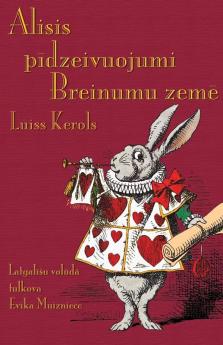
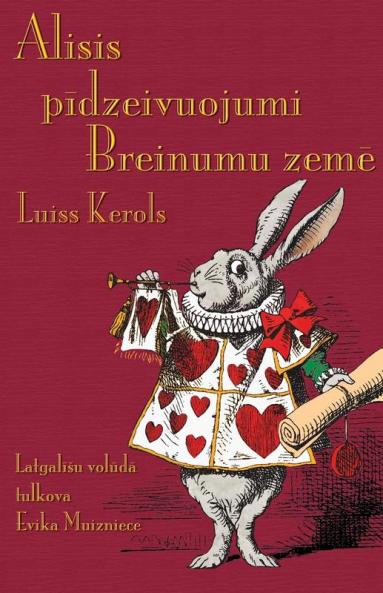
Luiss Kerols (Lewis Carroll) beja ?arlza Latvidza Dodzsona (Charles Lutwidge Dodgson) matematikys pasn?dzieja Kristus bazneicys koledz? Oksford? pseidonims. Juo slavanuo puorsoka roduos laivu brauc?n? pa Temzu Oksford? 1862. goda 4. jul?. Dodzsonu tym? pavadeja bazneickungs Robinsons Dakverts (Robinson Duckworth) i treis meitinis Kristus bazneicys dekana meitys: desmitgadeiguo Alise Lidele i juos muosys?-?treispadsmitgadeiguo Lorina i osto?us godus vacuo Edite. Kai pal?k skaidrs nu ?voda poemys tod muosys lyudza Dodzsonu stuost?t kaidu stuostu jis nu suokuma c?s nagribeigi suoce stuost?t i tai roduos pyrmuo verseja stuostam Alisis p?dzeivuojumi Breinumu zem?. P?cu laivys braucieju izteiktuos atzinis sasakuortuoja gruomot? kas d?nys gaismi ?raudzeja 1865. god?. Taitod tys ir pyrmais Alisis tulkuojums latgal?su vol?d? kurai laika gait? d?ti dazaidi apzeimiejumi (da 20. g. s. posi latgal?si i cyttautu pietn?ki t? sauc par latv?su vol?du tod teik izmontuoti dazaidi apzeimiejumi kab skiertu latgal?su vol?du nu latv?su literaruos vol?dys: latga?u izl?ksne latga?u vol?da augszemn?ku dialekts i cyti). Nu 1990. goda oficialais latgal?su vol?dys statuss n?teikts Va?sts vol?dys lykum? kai latv?su vol?dys viesturiskais paveids. --- Lewis Carroll is a pen-name: Charles Lutwidge Dodgson was the author's real name and he was lecturer in Mathematics in Christ Church Oxford. Dodgson began the story on 4 July 1862 when he took a journey in a rowing boat on the river Thames in Oxford together with the Reverend Robinson Duckworth with Alice Liddell (ten years of age) the daughter of the Dean of Christ Church and with her two sisters Lorina (thirteen years of age) and Edith (eight years of age). As is clear from the poem at the beginning of the book the three girls asked Dodgson for a story and reluctantly at first he began to tell the first version of the story to them. There are many half-hidden references made to the five of them throughout the text of the book itself which was published finally in 1865. The Latgalian language has had different designations. Until the twentieth century Latgalian researchers and the researchers of other countries simply called it the Latvian language; later other designations were used in order to distinguish the Latgalian language from the Latvian literary language: Latgalian dialect Latgalian language the dialect of the Eastern part of Latvia and so on. Since 1990 the official status of the Latgalian language has been established in the State Language Law as a historical variety of the Latvian language.

Piracy-free

Assured Quality

Secure Transactions

Fast Delivery

Sustainably Printed
Details
ISBN 13
9781782010463
Publication Date
-01-09-2015
Pages
-150
Weight
-185 grams
Dimensions
-140x216x8.85 mm
