



This Book is Out of Stock!
English


Hardback
₹13865
₹17032
18.59% OFF
(All inclusive*)
Delivery Options
*COD & Shipping Charges may apply on certain items.
Review final details at checkout.
Looking to place a bulk order? SUBMIT DETAILS

Piracy-free

Assured Quality

Secure Transactions
About The Book
Description
Author
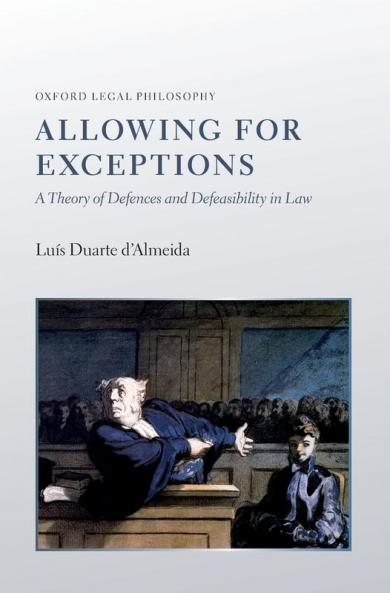
You find yourself in a court of law accused of having hit someone. What can you do to avoid conviction? You could simply deny the accusation: 'No I didn't do it'. But suppose you did do it. You may then give a different answer. 'Yes I hit him' you grant 'but it was self-defence'; or 'Yes but I was acting under duress'. To answer in this way-to offer a 'Yes but. . .' reply-is to hold that your particular wrong was committed in exceptional circumstances. Perhaps it is true that as a rule wrongdoers ought to be convicted. But in your case the court should set the rule aside. You should be acquitted. <p/>Within limits the law allows for exceptions. Or so we tend to think. In fact the line between rules and exceptions is harder to draw than it seems. How are we to determine what counts as an exception and what as part of the relevant rule? The distinction has important practical implications. But legal theorists have found the notion of an exception surprisingly difficult to explain. This is the longstanding jurisprudential problem that this book seeks to solve. <p/>The book is divided into three parts. Part I <em>Defeasibility in Question</em> introduces the topic and articulates the core puzzle of defeasibility in law. Part II <em>Defeasibility in Theory</em> develops a comprehensive proof-based account of legal exceptions. Part III <em>Defeasibility in Action</em> looks more closely into the workings of exceptions in accusatory contexts including the criminal trial.
Piracy-free
Assured Quality
Secure Transactions
*COD & Shipping Charges may apply on certain items.
Review final details at checkout.
₹13865
₹17032
18% OFF
Hardback
Out Of Stock
All inclusive*
Details
ISBN 13
9780199685783
Publication Date
-01-05-2015
Pages
-308
Weight
-532 grams
Dimensions
-156x234x19.05 mm
