

English


₹1828
₹2114
13.53% OFF
(All inclusive*)
Paperback
Delivery Options
Please enter pincode to check delivery time.
*COD & Shipping Charges may apply on certain items.
Review final details at checkout.
Looking to place a bulk order? SUBMIT DETAILS
Delivery Options
Please enter pincode to check delivery time.
*COD & Shipping Charges may apply on certain items.
Review final details at checkout.
About The Book
Description
Author
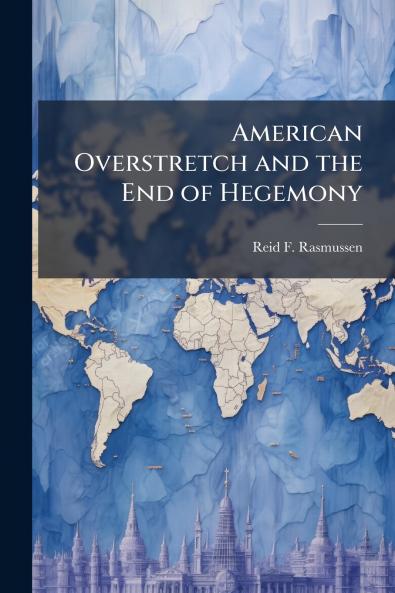
<p>This study is an analysis of U.S. hegemonic power and its components. The author seeks to determine if current U.S. hegemony is being compromised by strategic overstretch. Simply put is the U.S. taking on too much militarily and economically? To answer this question the study begins with a discussion of hegemonic military spending that demonstrates how a hegemon tends to purchase the amount of security that fits the budget rather than that which is necessary for its actual security. This is followed by a section that illustrates U.S. strategic overstretch through the increased use of mercenaries. Lastly in a section devoted to the application of military power the author points out the dangers of becoming involved in military efforts that are tangential to actual state interests. In arguing that the inability of the United States to either moderate spending or to increase taxes has materially weakened U.S. power and threatens its hegemony the author illustrates how similar deficit spending helped to end British hegemony at the beginning of the 20th century. As a final effort to assess U.S. hegemonic status beyond comparison to previous hegemons the author then includes a section that shows a potential area for analyzing strategic overstretch focusing on U.S. participation and the backing of international institutions. Lastly the study concludes by recommending two distinct courses of action to prevent strategic overstretch. The first is a dramatic increase in the ratio of Reserve to Active Duty forces in the U.S. military as a means to limit military overstretch. The second is the passing of a Balanced Budget Amendment in order to prevent economic overstretch. The author finds that systematic changes are necessary to prevent the loss of U.S. hegemonic power.</p><p>This work has been selected by scholars as being culturally important and is part of the knowledge base of civilization as we know it. This work was reproduced from the original artifact and remains as true to the original work as possible. Therefore you will see the original copyright references library stamps (as most of these works have been housed in our most important libraries around the world) and other notations in the work.</p><p>This work is in the public domain in the United States of America and possibly other nations. Within the United States you may freely copy and distribute this work as no entity (individual or corporate) has a copyright on the body of the work.</p><p>As a reproduction of a historical artifact this work may contain missing or blurred pages poor pictures errant marks etc. Scholars believe and we concur that this work is important enough to be preserved reproduced and made generally available to the public. We appreciate your support of the preservation process and thank you for being an important part of keeping this knowledge alive and relevant.</p>

Piracy-free

Assured Quality

Secure Transactions

Fast Delivery

Sustainably Printed
Details
ISBN 13
9781288316427
Publication Date
-19-11-2012
Pages
-116
Weight
-177 grams
Dimensions
-156x234x6.33 mm
