


English



Paperback
₹3183
₹3327
4.33% OFF
(All inclusive*)
Delivery Options
Please enter pincode to check delivery time.
*COD & Shipping Charges may apply on certain items.
Review final details at checkout.
Looking to place a bulk order? SUBMIT DETAILS
Delivery Options
Please enter pincode to check delivery time.
*COD & Shipping Charges may apply on certain items.
Review final details at checkout.
About The Book
Description
Author
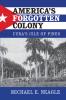
America''s Forgotten Colony examines private US citizens'' experiences on Cuba''s Isle of Pines to show how American influence adapted and endured in republican-era Cuba (1902–58). This transnational study challenges the notion that US territorial ambitions waned after the nineteenth century. Many Americans anxious about a ''closed'' frontier in an industrialized urbanized United States migrated to the Isle and pushed for agrarian-oriented landed expansion well into the twentieth century. Their efforts were stymied by Cuban resistance and reluctant US policymakers. After decades of tension however a new generation of Americans collaborated with locals in commercial and institutional endeavors. Although they did not wield the same influence Americans nevertheless maintained a significant footprint. The story of this cooperation upsets prevailing conceptions of US domination and perpetual conflict revealing that US-Cuban relations at the grassroots were not nearly as adversarial as on the diplomatic level at the dawn of the Cuban Revolution.

Piracy-free

Assured Quality

Secure Transactions

Fast Delivery

Sustainably Printed
Details
ISBN 13
9781316502013
Publication Date
-06-07-2017
Pages
-324
Weight
-441 grams
Dimensions
-152x229x17.97 mm
