

English


Paperback
₹881
₹1380
36.16% OFF
(All inclusive*)
Delivery Options
Please enter pincode to check delivery time.
*COD & Shipping Charges may apply on certain items.
Review final details at checkout.
Looking to place a bulk order? SUBMIT DETAILS
Delivery Options
Please enter pincode to check delivery time.
*COD & Shipping Charges may apply on certain items.
Review final details at checkout.
About The Book
Description
Author
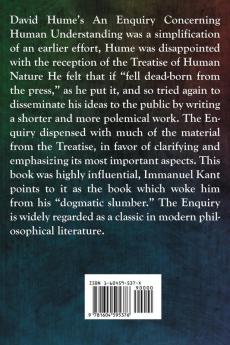
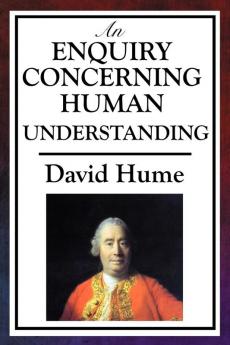
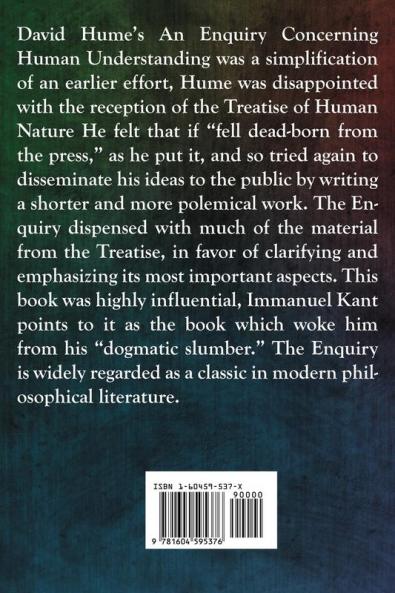
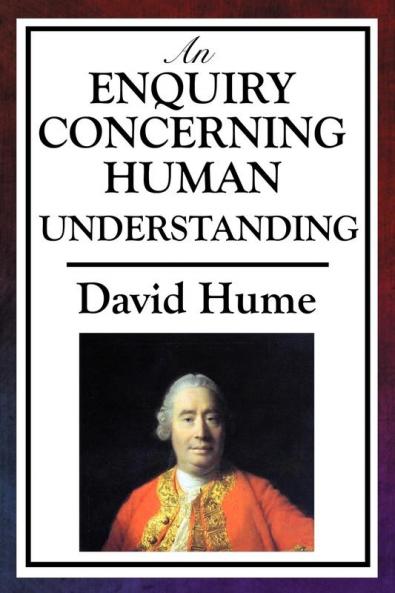
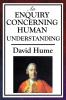
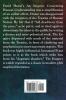
<p><strong>David Hume's <em>An Enquiry Concerning Human Understanding</em> is one of the central works of modern philosophy a concise and powerful examination of knowledge belief causation scepticism miracles and the limits of human reason.</strong> First published in 1748 the book recast arguments Hume had developed in <em>A Treatise of Human Nature</em> into a shorter clearer and more forceful form. It remains one of the most important statements of British empiricism and one of the defining texts in the history of epistemology.</p><p>Hume asks what the human mind can truly know how ideas arise from experience why people believe in cause and effect and whether reason can justify the assumptions on which ordinary life depends. His famous discussion of miracles his analysis of necessary connection and his sceptical account of induction helped reshape philosophy and later forced Immanuel Kant to confront what Kant called his dogmatic slumber. Written with clarity irony and intellectual discipline <em>An Enquiry Concerning Human Understanding</em> is essential reading for students of philosophy Enlightenment thought scepticism empiricism philosophy of religion and the history of ideas.</p>

Piracy-free

Assured Quality

Secure Transactions

Fast Delivery

Sustainably Printed
Details
ISBN 13
9781604595376
Publication Date
-01-11-2008
Pages
-116
Weight
-169 grams
Dimensions
-152x229x6.99 mm
