

English


₹7565
(All inclusive*)
Paperback
Delivery Options
Please enter pincode to check delivery time.
*COD & Shipping Charges may apply on certain items.
Review final details at checkout.
Looking to place a bulk order? SUBMIT DETAILS
Delivery Options
Please enter pincode to check delivery time.
*COD & Shipping Charges may apply on certain items.
Review final details at checkout.
About The Book
Description
Author
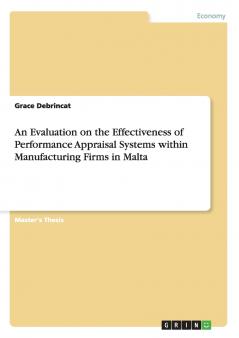
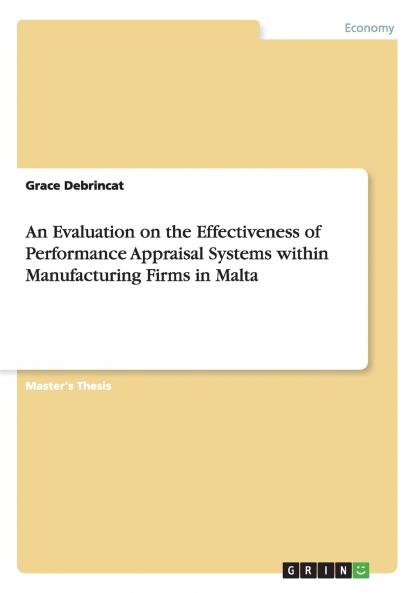
Master's Thesis from the year 2011 in the subject Leadership and Human Resources - Miscellaneous grade: B+ University of Leicester course: Masters Degree - Employee Relations and Human Resource Management language: English abstract: Manufacturing firms based in Malta are striving to improve productivity levels in their quest to sustain their competitiveness thus the need to assess employees' performance is becoming crucial. Performance Appraisals (PA) is a tool which is associated with employee performance evaluation. However researchers tend to disagree on the effectiveness of such systems. Academics claim that PAs improve employees' performance through commitment motivation and output increases whilst providing an optimal basis for a reward system and training needs. Conversely it is argued that PAs are flawed from inception since they are subjective biased and unfair. Additionally research strongly indicates that no conclusive evidence can be provided whether productivity increases as a direct result of PAs outcome. Thus the objective of this dissertation is to evaluate the effectiveness of PAs within manufacturing firms in Malta. The study critically assesses research on PAs and their effectiveness towards company goals whilst identifying a set of criteria derived from the literature to test the extent of PAs effectiveness. The methodology chosen is of a qualitative and exploratory nature based on a non-probability self-selection sample applied through interviews with HR Practitioners. The interview responses are then categorised in themes each evaluated to test the effectiveness of PAs. The research reveals that medium and large-sized manufacturing firms in Malta undertake PAs mostly as a control mechanism and reward system. The findings reject the notion that PAs are totally flawed and ineffective. However HR Practitioners tend to agree that subjectivity in ratings appraisers' incompetency and reluctance by managers to undertake

Piracy-free

Assured Quality

Secure Transactions

Fast Delivery

Sustainably Printed
Details
ISBN 13
9783656547051
Publication Date
-22-11-2013
Pages
-108
Weight
-142 grams
Dimensions
-148x210x6.57 mm
