


This Book is Out of Stock!
English


Paperback
₹2191
₹3599
39.12% OFF
(All inclusive*)
Delivery Options
*COD & Shipping Charges may apply on certain items.
Review final details at checkout.
Looking to place a bulk order? SUBMIT DETAILS

Piracy-free

Assured Quality

Secure Transactions
About The Book
Description
Author
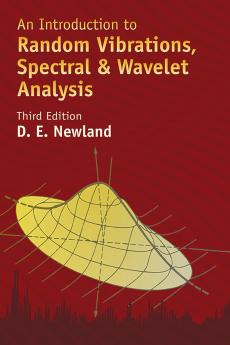
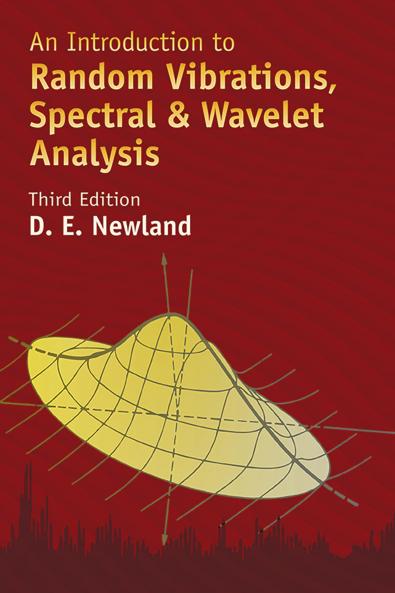
One of the first engineering books to cover wavelet analysis this classic text describes and illustrates basic theory with a detailed explanation of the workings of discrete wavelet transforms. Computer algorithms are explained and supported by examples and a set of problems and an appendix lists ten computer programs for calculating and displaying wavelet transforms.<br>Starting with an introduction to probability distributions and averages the text examines joint probability distributions ensemble averages and correlation; Fourier analysis; spectral density and excitation response relations for linear systems; transmission of random vibration; statistics of narrow band processes; and accuracy of measurements. Discussions of digital spectral analysis cover discrete Fourier transforms as well as windows and smoothing. Additional topics include the fast Fourier transform; pseudo-random processes; multidimensional spectral analysis; response of continuous linear systems to stationary random excitation; and discrete wavelet analysis.<br>Numerous diagrams and graphs clarify the text and complicated mathematics are simplified whenever possible. This volume is suitable for upper-level undergraduates and graduate students in engineering and the applied sciences; it is also an important resource for professionals.
Piracy-free
Assured Quality
Secure Transactions
*COD & Shipping Charges may apply on certain items.
Review final details at checkout.
₹2191
₹3599
39% OFF
Paperback
Out Of Stock
All inclusive*
Details
ISBN 13
9780486442747
Publication Date
-26-07-2005
Pages
-477
Weight
-468 grams
Dimensions
-154.9x233.7x28.5 mm
