

English


₹3819
₹5016
23.86% OFF
(All inclusive*)
Paperback
Delivery Options
Please enter pincode to check delivery time.
*COD & Shipping Charges may apply on certain items.
Review final details at checkout.
Looking to place a bulk order? SUBMIT DETAILS
Delivery Options
Please enter pincode to check delivery time.
*COD & Shipping Charges may apply on certain items.
Review final details at checkout.
About The Book
Description
Author(s)
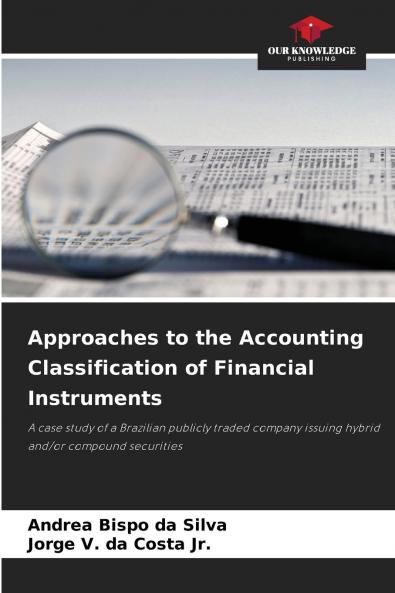
Hybrid and/or composite financial instruments have been a constant topic in accounting regulation. The critical point of the entire discussion lies in the distinction between liability and equity items. This topic is regulated in IAS 32 (PT CPC No. 39) and is present in the Discussion Paper - A review of the conceptual framework for financial reporting (IASB 2013) which presents two approaches that can be used to simplify the distinction between a liability and equity item: the narrow equity approach (NEA) and the strict obligation approach (SOA). The adoption of each of these approaches will have a different impact on debt/leverage levels and the potential for dilution of shareholders' interests. This study aims to investigate approaches to the accounting classification of debentures mandatorily convertible into shares vis-à-vis IAS 32 (PT CPC No. 39) and the IASB Discussion Paper (NEA x SOA). The methodology adopted is a case study of a Brazilian publicly traded company that issued mandatorily convertible debentures and classified these instruments in a manner considered inappropriate by the regulatory body.

Piracy-free

Assured Quality

Secure Transactions

Fast Delivery

Sustainably Printed
Details
ISBN 13
9786209159411
Publication Date
-21-10-2025
Pages
-68
Weight
-106 grams
Dimensions
-152x229x4.14 mm
