




This Book is Out of Stock!
English




Hardback
₹5527
₹6375
13.3% OFF
(All inclusive*)
Delivery Options
*COD & Shipping Charges may apply on certain items.
Review final details at checkout.
Looking to place a bulk order? SUBMIT DETAILS

Piracy-free

Assured Quality

Secure Transactions
About The Book
Description
Author
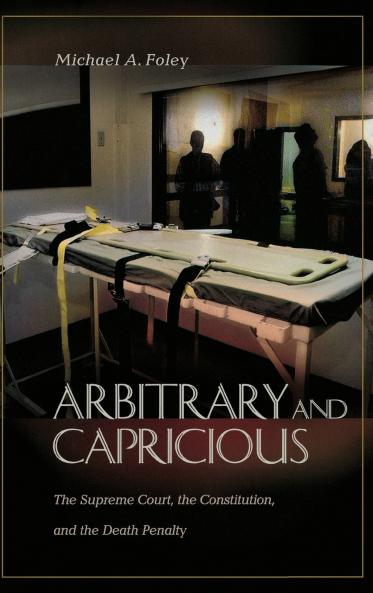
Justice Marshall once remarked that if people knew what he knew about the death penalty they would reject it overwhelmingly. Foley elucidates Marshall''s claim that fundamental flaws exist in the implementation of the death penalty. He guides us through the history of the Supreme Court''s death penalty decisions revealing a constitutional quagmire the Court must navigate to avoid violating the fundamental tenant of equal justice for all.Nearly 100 influential Supreme Court capital punishment-related cases from 1878-2002 are examined beginning with Wilkerson v. Utah which question not the legitimacy of capital punishment but the methods of execution. Over time focus shifted from the constitutionality of certain methods to the fairness of who was being sentenced for capital crimesand why. The watershed 1972 ruling Furman v. Georgia reversed the Court''s stand on capital punishment holding that the arbitrary and capricious imposition of the death penalty is cruel and unusual punishment and therefore unconstitutional. Furman clarified that any new death penalty legislation must contain sentencing procedures that avoid the arbitrary infliction of a life-ending verdict which led to the current complex tangle of issues surrounding the death penalty and its constitutional viability.
Piracy-free
Assured Quality
Secure Transactions
*COD & Shipping Charges may apply on certain items.
Review final details at checkout.
₹5527
₹6375
13% OFF
Hardback
Out Of Stock
All inclusive*
Details
ISBN 13
9780275975876
Publication Date
-30-06-2003
Pages
-264
Weight
-472 grams
Dimensions
-156x234x15.88 mm
