

English


₹19193
(All inclusive*)
Hardback
Delivery Options
Please enter pincode to check delivery time.
*COD & Shipping Charges may apply on certain items.
Review final details at checkout.
Looking to place a bulk order? SUBMIT DETAILS
Delivery Options
Please enter pincode to check delivery time.
*COD & Shipping Charges may apply on certain items.
Review final details at checkout.
About The Book
Description
Author
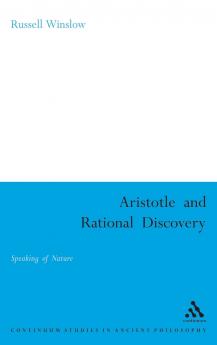
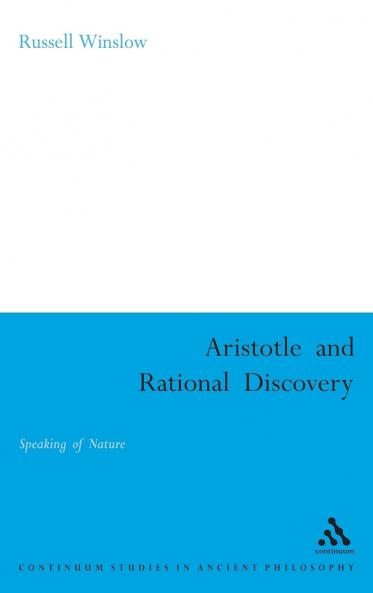
In this lively and original book Russell Winslow pursues a new interpretation of logos in Aristotle. Rather than a reading of rationality that cleaves human beings from nature this new interpretation suggests that for Aristotle consistent and dependable rational arguments reveal a deep dependency upon nature. To this end the author shows that a rational account of a being is in fact subject to the very same principle that governs the physical motion and generation of a being under inquiry. Among the many consequences of this argument is a rejection of both of the prevailing oppositional claims that Aristotle's methodological procedure of discovery is one resting on either empirical or conceptual grounds: discovery reveals a more complex structure than can be grasped by either of these modern modes. Further Winslow argues that this interpretation of rational discovery also contributes to the ethical debates surrounding Aristotle's work insofar as an ethical claim is achieved through reason but is not thereby conceived as objective. Again the demand for agreement in ethical/political decision will be disclosed as superseding in its complexity both those accounts of ethical decision as subjective (for example emotivist accounts) and those as objective (realist accounts).

Piracy-free

Assured Quality

Secure Transactions

Fast Delivery

Sustainably Printed
Details
ISBN 13
9780826496874
Publication Date
-03-09-2007
Pages
-160
Weight
-329 grams
Dimensions
-155.96x233.93x10.22 mm
