

English


₹4989
₹4998
0.18% OFF
(All inclusive*)
Paperback
Delivery Options
Please enter pincode to check delivery time.
*COD & Shipping Charges may apply on certain items.
Review final details at checkout.
Looking to place a bulk order? SUBMIT DETAILS
Delivery Options
Please enter pincode to check delivery time.
*COD & Shipping Charges may apply on certain items.
Review final details at checkout.
About The Book
Description
Author
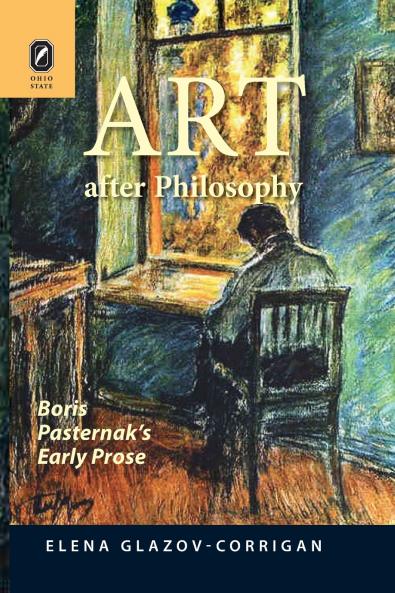
<div> <div><i>Art after Philosophy: Boris Pasternak's Early Prose</i> by Elena Glazov-Corrigan redefines an area in Slavic studies which has suffered from neglect for several decades namely Pasternak's early prose narratives. In her bold new study Glazov-Corrigan analyzes the conceptual networks of thought Pasternak developed when he turned to literature after abandoning the study of Neo-Kantianism in Marburg during the summer of 1912. This book shows conclusively that Pasternak's knowledge of philosophy is inseparable from his prose works even though in his early stories and novellas (1913-1918) philosophical ideas operate neither as discrete textual units nor as micro-elements or clusters of possible signification. In the early Pasternak philosophy becomes a narrative art a large-scale narrative frame a manner of seeing rather than of constructing reality.</div> <div>&nbsp;</div> <div>After Roman Jakobson's famous 1935 essay which characterized the early Pasternak as a virtuoso of metonymy in contrast to the metaphoric Mayakovsky no other approach has been able to generate comparable scholarly influence. The present study takes up the implicit challenge of this critical impasse. Entering into a debate with Jakobson's findings <i>Art after Philosophy</i> illuminates Pasternak's boldest artistic experiments and suggests to his readers entirely new ways of approaching not only his early but also his later writing.</div> </div>

Piracy-free

Assured Quality

Secure Transactions

Fast Delivery

Sustainably Printed
Details
ISBN 13
9780814256343
Publication Date
-09-10-2020
Pages
-366
Weight
-495 grams
Dimensions
-152x229x20.72 mm
