



This Book is Out of Stock!
English



Paperback
₹5773
₹6518
11.43% OFF
(All inclusive*)
Delivery Options
*COD & Shipping Charges may apply on certain items.
Review final details at checkout.
Looking to place a bulk order? SUBMIT DETAILS
*COD & Shipping Charges may apply on certain items.
Review final details at checkout.
₹5773
₹6518
11% OFF
Paperback
Out Of Stock
All inclusive*
About The Book
Description
Author
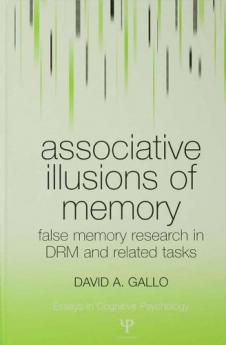
The last decade has seen a flurry of experimental research into the neurocognitive underpinnings of illusory memories. Using simple materials and tests (e.g. recalling words or pictures) methods such as the famed Deese-Roediger-McDermott (DRM) task have attracted considerable attention. These tasks elicit false memories of nonstudied events that are vivid long lasting and difficult to consciously avoid. Additional research shows that these memory illusions are fundamentally related to more complex memory distortions. As a result this rapidly expanding literature has generated a great deal of excitement - and even some controversy - in contemporary psychology.Associative Illusions of Memory provides an ambitious overview of this research area. Starting with the historical roots and major theoretical trends this book exhaustively reviews the most recent studies by cognitive psychologists neuropsychologists and cognitive neuroscientists. The strengths and limits of various experimental techniques are outlined and the large body of existing data is meaningfully distilled into a few core theoretical concepts.This book highlights the malleability of memory as well as the strategies and situations that can help us avoid false memories. Throughout the review it is argued that these basic memory illusions contribute to a deeper understanding of how human memory works.

Piracy-free

Assured Quality

Secure Transactions

Fast Delivery

Sustainably Printed
Details
ISBN 13
9781138006072
Publication Date
-09-06-2014
Pages
-302
Weight
-412 grams
Dimensions
-152x229x16.12 mm
