






₹4754
₹6141
22.59% OFF
(All inclusive*)
Paperback
Delivery Options
Please enter pincode to check delivery time.
*COD & Shipping Charges may apply on certain items.
Review final details at checkout.
Looking to place a bulk order? SUBMIT DETAILS
Delivery Options
Please enter pincode to check delivery time.
*COD & Shipping Charges may apply on certain items.
Review final details at checkout.
About The Book
Description
Author
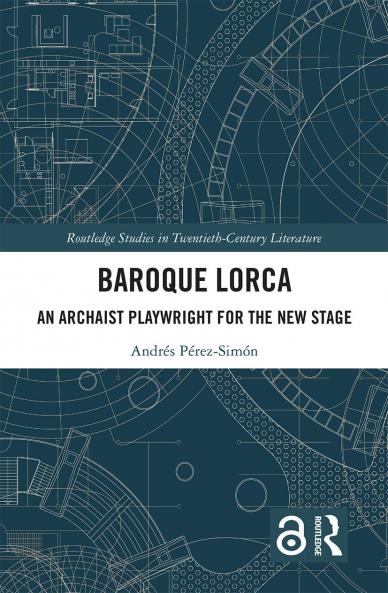
<p><i>Baroque Lorca: An Archaist Playwright for the New Stage </i>defines Federico García Lorca’s trajectory in the theater as a lifelong search for an audience. It studies a wide range of dramatic writings that Lorca created <i>for</i> the theater in direct response to the conditions of his contemporary industry and situates the theory and praxis of his theatrical reform in dialogue with other modernist renovators of the stage. This book makes special emphasis on how Lorca engaged with the tradition of Spanish Baroque in particular with Cervantes and Calderón to break away from the conventions of the illusionist stage. The five chapters of the book analyze Lorca’s different attempts to change the dynamics of the Spanish stage from 1920 to his assassination in 1936: His initial incursions in the arenas of symbolist and historical drama (<i>The Butterfly’s Evil Spell</i> <i>Mariana Pineda</i>); his interest in puppetry (<i>The Billy-Club Puppets</i> and <i>In the Frame of Don Cristóbal</i>) and the two ‘human’ farces <i>The Shoemaker’s Prodigious Wife</i> and <i>The Love of Don Perlimplín and Belisa in the Garden</i>; the central piece in his project of ‘impossible’ theater (<i>The Public</i>); his most explicitly political play one that takes the violence to the spectators’ seats (<i>The Dream of Life</i>); and his three plays adopting an altering the contemporary formula of ‘rural drama’ (<i>Blood</i> <i>Wedding</i> <i>Yerma</i> and <i>The House of Bernarda Alba</i>). </p><p>Chapter 5 of this book is freely available as a downloadable Open Access PDF under a Creative Commons Attribution-Non Commercial-No Derivatives 4.0 license.</p>

Piracy-free

Assured Quality

Secure Transactions

Fast Delivery

Sustainably Printed
Details
ISBN 13
9781032048208
Publication Date
-30-09-2021
Pages
-170
Weight
-239 grams
Dimensions
-151.89x229.11x9.33 mm
