





₹5487
₹21880
74.92% OFF
(All inclusive*)
Hardback
Delivery Options
Please enter pincode to check delivery time.
*COD & Shipping Charges may apply on certain items.
Review final details at checkout.
Looking to place a bulk order? SUBMIT DETAILS
Delivery Options
Please enter pincode to check delivery time.
*COD & Shipping Charges may apply on certain items.
Review final details at checkout.
About The Book
Description
Author
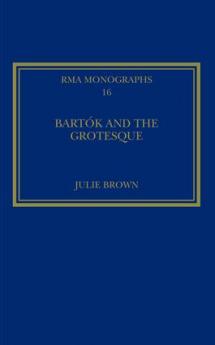
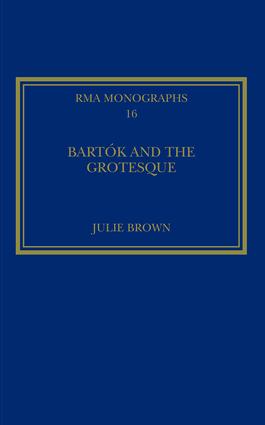
The grotesque is one of art's most puzzling figures - transgressive comprising an unresolveable hybrid generally focussing on the human body full of hyperbole and ultimately semantically deeply puzzling. In Bluebeard's Castle (1911) The Wooden Prince (1916/17) The Miraculous Mandarin (1919/24 rev. 1931) and Cantata Profana (1930) Bartók engaged scenarios featuring either overtly grotesque bodies or closely related transformations and violations of the body. In a number of instrumental works he also overtly engaged grotesque satirical strategies sometimes - as in Two Portraits: 'Ideal' and 'Grotesque' - indicating this in the title. In this book Julie Brown argues that Bartók's concerns with stylistic hybridity (high-low East-West tonal-atonal-modal) the body and the grotesque are inter-connected. While Bartók developed each interest in highly individual ways and did so separately to a considerable extent the three concerns remained conceptually interlinked. All three were thoroughly implicated in cultural constructions of the Modern during the period in which Bartók was composing.

Piracy-free

Assured Quality

Secure Transactions

Fast Delivery

Sustainably Printed
Details
ISBN 13
9780754657774
Publication Date
-28-10-2007
Pages
-192
Weight
-374 grams
Dimensions
-150.114x244.094x11.864 mm
