

English


Paperback
₹7264
(All inclusive*)
Delivery Options
Please enter pincode to check delivery time.
*COD & Shipping Charges may apply on certain items.
Review final details at checkout.
Looking to place a bulk order? SUBMIT DETAILS
Delivery Options
Please enter pincode to check delivery time.
*COD & Shipping Charges may apply on certain items.
Review final details at checkout.
About The Book
Description
Author
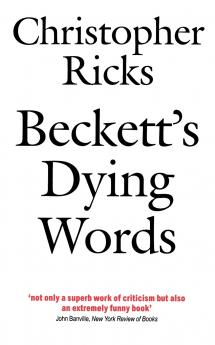
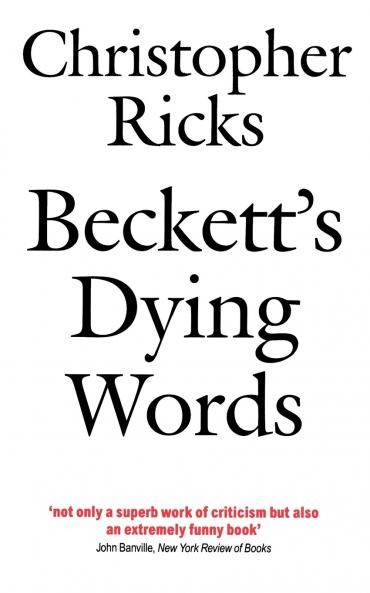
Most people most of the time want to live for ever. But there is another truth; the longing for oblivion. With pain wit and humour the art of Samuel Beckett variously embodies this truth this ancient enduring belief that it is better to be dead than alive best of all never to have been born. Beckett is the supreme writer of an age which has created new possiblities and impossibilities even in the matter of death and its definition an age of transplants and life-support.But how does a writer give life to dismay at life itself to the not-simply-unwelcome encroachments of death? After all it is for the life the vitality of their language that we value writers. As a young man Beckett himself praised Joyce''s words. `They are alive.''Beckett became himself as a writer when he realized in his very words a principle of death. In cliches which are dead but won''t lie down. In a dead language and its memento mori. In words which mean their own opposites cleaving and cleaving. In the self-stultifying or suicidal turn dubbed the Irish bull. In what Beckett called a syntax of weakness.This book explores the relation between deep convictions about life or death and the incarnations which these take in the exact turns of a great writer - the realizations of an Irishman who wrote in English and in French two languages with different apprehensions of life and of death.

Piracy-free

Assured Quality

Secure Transactions
Details
ISBN 13
9780192824073
Publication Date
-01-03-1995
Pages
-228
Weight
-234 grams
Dimensions
-127x203x13.19 mm
