



This Book is Out of Stock!
English


Hardback
₹2496
(All inclusive*)
Delivery Options
*COD & Shipping Charges may apply on certain items.
Review final details at checkout.
Looking to place a bulk order? SUBMIT DETAILS

Piracy-free

Assured Quality

Secure Transactions
About The Book
Description
Author
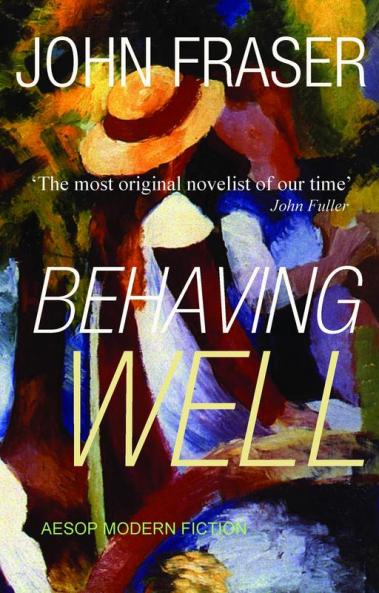
<p><strong>Behaving Well</strong> consists of t<strong>hree stories on a related theme:</strong></p><p>&nbsp;</p><p>When people are forced to leave their home in the new place they&#39;re often told to &#39;behave themselves&#39; or be sent back to to somewhere else. In jail or equivalent they - everyone - may be let go early for &#39;good behaviour&#39;. Behaving well is a condition for staying somewhere - even somewhere you don&#39;t want to be - and &#39;going back&#39; may pose dilemmas even more problematic than behaving badly. You find yourself in a chain of ill-fortunes and tragedies - a nakba a catastrophe as one aspect of it has been called. What other rules exist except our efforts at &#39;behaving well&#39;? But you change through life; you watch injustices you say you cannot remedy. And your behaviour changes together with its driving principles. If you want history - you can&#39;t have good behaviour.</p><p>&nbsp;</p><p><strong>Good Behaviour: </strong>Alex undocumented immigrant is inspired shadowed by the adventures of Alexander the Great. No one says Alexander behaved well - but he acted! He transformed. He shaped the classical world scattered Greeks all over changed cultures till his suicidal addictions finished him.&nbsp;Alex starts precarious: is jailed meets a real hero Valerio - joins the ex-prisoners and outcasts in a barren place. There they improvise a polity - growing natural drugs organising an army. Valerio is their inspiration their guide. Alex teams up with Anicette whose inspiration is the book &#39;On Lying&#39;. He spins out of control but his behaviour is consistent. People close to Alex behave in different ways but all maintain their principles Anicette as well. Anicette joins with a young ambitious woman M&eacute;lisande. After the death of Alex we see all who are left have indeed behaved well - at least consistently. Alex though has acted and imagined: the others they only react.&nbsp;&nbsp; &nbsp; Anicette concludes instructing M&eacute;lisande - the only judge of our behaviour is ourself.&nbsp;</p><p>&nbsp;</p><p><strong>Misconduct</strong>: Does behaving well count for something? It doesn&#39;t seem to matter for success and failure revelation or obscurity. In Misconduct Matti a political exile with aspirations of humanistic value tries to make a life - maintaining principles but surviving - the betrayal of his partner unofficial enslavement. He wanders has adventures - becomes a military strategist travels to the stepps with a lady jockey - but his life is seeing others ride away betray or suffer punishments promotions - which he&#39;s been unabvle to prevent or even understand. Ultimately his organisation gives him the mission - to assassinate the Chief. To do so means his organisation will be expunged - a mass non-violent movement non-violent exposed. But for the otther opposition assassination means a civil war that they are bound to lose. Matti would betray his principles his own morality - and probably involve all oppositions in disaster. But - loyalty behaving well or badly - he has no choice. Many real circumstances involve the exiled militants in just this - perfidious - choice.</p><p><strong>Catastrophe: </strong>The catastrophe is that everything happens comes to an end - without a scrap of meaning still less justice truth equity. Some people behave very poorly: Yannick who has &#39;saved&#39; Hana and enslaved her Pavel .... for others the behaviour is just on the edge of awful - Typhaine ....&nbsp;Dr Hoffman sees and can do nothing except register. Hana has character but no context where the character can assert itself or indeed be good or bad.</p>
Piracy-free
Assured Quality
Secure Transactions
*COD & Shipping Charges may apply on certain items.
Review final details at checkout.
₹2496
Out Of Stock
All inclusive*
Details
ISBN 13
9781910301784
Publication Date
-01-03-2021
Pages
-222
Weight
-343 grams
Dimensions
-140x216x15.88 mm
