


by
John Lok
English


Paperback
₹1710
₹2057
16.87% OFF
(All inclusive*)
Delivery Options
Please enter pincode to check delivery time.
*COD & Shipping Charges may apply on certain items.
Review final details at checkout.
Looking to place a bulk order? SUBMIT DETAILS
Delivery Options
Please enter pincode to check delivery time.
*COD & Shipping Charges may apply on certain items.
Review final details at checkout.
About The Book
Description
Author
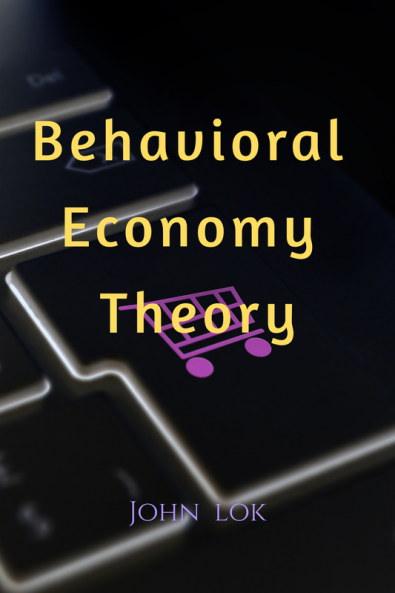
<p>In my analysis utilizes practical case studies to illustrate how traditional models fail to predict real-world outcomes. Traditional economics assumes that if a consumer is presented with two identical products at different prices they will always choose the cheaper one to maximize their utility.For instance a consumer might perceive a product as higher quality simply because it is priced higher a phenomenon known as the price-quality heuristic which contradicts the traditional assumption of price sensitivity.</p><p>My approach emphasizes that while traditional economics provides a useful mathematical baseline for market equilibrium it lacks the descriptive power to account for human fallibility.</p><p>Through my case studies demonstrate that businesses and policymakers can achieve better results by nudging individuals toward beneficial outcomes acknowledging that people are not always the calculating machines that classical theory suggests.ehaviors-such as individual saving rates or consumption habits-are not merely personal choices but are conditioned by macroeconomic signals like inflation and government policy. When policies fail to account for cognitive biases such as loss aversion or hyperbolic discounting they often produce unintended consequences that disrupt the very economic stability they aim to foster</p>

Piracy-free

Assured Quality

Secure Transactions

Fast Delivery

Sustainably Printed
Details
ISBN 13
9798885918145
Publication Date
-09-02-2022
Pages
-498
Weight
-669 grams
Dimensions
-152.4x228.6x26.18 mm
