

English


₹2925
(All inclusive*)
Paperback
Delivery Options
Please enter pincode to check delivery time.
*COD & Shipping Charges may apply on certain items.
Review final details at checkout.
Looking to place a bulk order? SUBMIT DETAILS
Delivery Options
Please enter pincode to check delivery time.
*COD & Shipping Charges may apply on certain items.
Review final details at checkout.
About The Book
Description
Author(s)
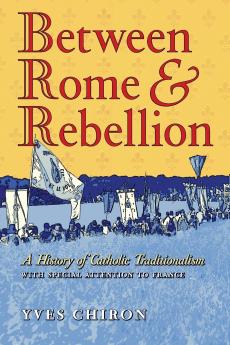
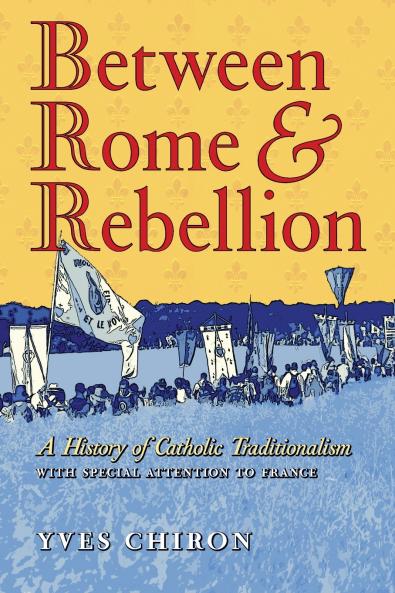
<p>With <em>Between</em> <em>Rome and Rebellion</em> Yves Chiron acclaimed author of dozens of biographies and historical studies once again proves himself a master historian<em>. </em>Drawing upon a vast fund of information gathered over the course of three decades including numerous interviews correspondence diaries and archives Chiron tells the thrilling at times gut-wrenching story of the loyal resistance of Catholics-especially in France but soon all over the world-who held fast to the old forms of worship catechesis doctrine and family life in the midst of a Church roiling with reforms that they viewed as betrayals. </p><p>&nbsp;&nbsp;&nbsp;&nbsp;&nbsp;&nbsp;&nbsp;&nbsp;&nbsp;Starting with the Modernist crisis and Pius X's response to it we follow in these pages the immense drama of a century filled with battles on every front-political military and ecclesiastical. We learn of the vitality but also the fissiparousness of traditionalist groups at a time when nearly everything else in the Church seemed to be falling apart especially after the tumultuous years of the Second Vatican Council. We see the rage directed at traditionalists by an establishment that tolerates any experiment except the experiment of Tradition and writes off all adherence to the past as integrism. As everyone tries to navigate the turbulent waters of a conciliar renewal that quickly turned into a debacle we become acquainted with modern-day confessors and white martyrs wild-eyed prophets and sober critics two-faced churchmen and secret allies. Chiron's deft pen brings many controversial figures into sharp relief-above all Archbishop Marcel Lefebvre founder of the Priestly Society of St. Pius X with whose formidable witness everyone friend or foe had to reckon. </p><p>&nbsp;&nbsp;&nbsp;&nbsp;&nbsp;&nbsp;&nbsp;&nbsp;&nbsp;Breathlessly moving from one disaster and rescue operation to the next <em>Between</em> <em>Rome and Rebellion </em>sheds new light on the modern transformation of the Catholic Church and why numerous priests religious and laity felt compelled to stand against it.</p>

Piracy-free

Assured Quality

Secure Transactions

Fast Delivery

Sustainably Printed
Details
ISBN 13
9798892800266
Publication Date
-14-06-2024
Pages
-432
Weight
-582 grams
Dimensions
-152x229x24.41 mm
