



English





Paperback
₹1400
(All inclusive*)
Delivery Options
Please enter pincode to check delivery time.
*COD & Shipping Charges may apply on certain items.
Review final details at checkout.
Looking to place a bulk order? SUBMIT DETAILS
Delivery Options
Please enter pincode to check delivery time.
*COD & Shipping Charges may apply on certain items.
Review final details at checkout.
About The Book
Description
Author
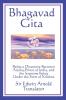
<p><strong><em>Bhagavad-Gita</em> is Sir Edwin Arnold's influential English rendering of one of the central sacred texts of Hinduism and one of the great spiritual classics of world literature.</strong> Presented in elevated poetic prose Arnold's version brings the dialogue between Krishna and Arjuna to English-speaking readers as a work of devotion philosophy moral instruction and spiritual insight. On the battlefield of Kurukshetra Arjuna confronts duty grief violence conscience and the meaning of right action while Krishna reveals a vision of the soul divine reality disciplined action devotion and liberation.</p><p>First published in 1885 as <em>The Song Celestial</em> Arnold's translation helped introduce the <em>Bhagavad-Gita</em> to a broad Western audience and became one of the most widely read nineteenth-century English versions of the text. Its literary style reflects the Victorian encounter with Indian scripture offering a reverent and accessible interpretation of a work that has shaped Hindu philosophy yoga devotional thought and comparative religion for centuries.</p><p>For readers of Hindu sacred writings Eastern philosophy comparative religion yoga spiritual classics and world literature Arnold's <em>Bhagavad-Gita</em> remains historically important and deeply readable. It stands both as a presentation of the Gita's enduring teachings and as a significant document in the transmission of Indian religious and philosophical thought to the modern English-speaking world.</p>

Piracy-free

Assured Quality

Secure Transactions

Fast Delivery

Sustainably Printed
Details
ISBN 13
9781617203374
Publication Date
-24-04-2011
Pages
-90
Weight
-135 grams
Dimensions
-152x229x5.47 mm
