


English



Hardback
₹6400
₹6507
1.64% OFF
(All inclusive*)
Delivery Options
Please enter pincode to check delivery time.
*COD & Shipping Charges may apply on certain items.
Review final details at checkout.
Looking to place a bulk order? SUBMIT DETAILS

Piracy-free

Assured Quality

Secure Transactions
About The Book
Description
Author
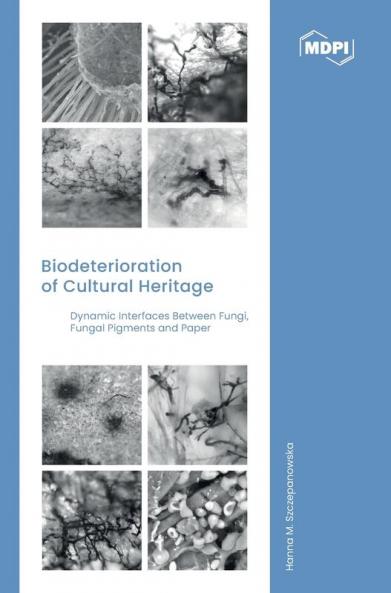
<p>Fungi-induced stains on paper are one of the most challenging forms of biodeterioration to study and to prevent; this is because they involve living organisms and the ways in which fungi respond to changes in the environment and modifications of paper are unpredictable. Yet there is a great desire among those who encounter fungi on documents manuscripts or artwork to remove fungi and clean the paper. This experience in most cases is particularly challenging. What are the reasons behind this challenge? This ground-breaking book attempts to answer this question among others by exploring the complex interfacial forces between paper fungi and their pigmented secretions which result in bio-stains on paper. Black fungi collectively referred to as Dematiaceous fungi were used in this study as a subset of pigment-producing fungi species. The focus is on two under-studied aspects of the fungi infestation of paper an interface of fungal pigments and paper and the impact of light on the production of fungi bio-stains. The results of analytical testing included in this book elucidate the synergistic interactions between the environment biological clocks of the microorganisms and secretion of fungal pigments to paper. The black fungal pigment formation is explored in-depth in two scenarios: one that is 'natural' when the bio-stains of original artworks have occurred over time by chance and another induced by Aspergillus niger in bio-simulation on known papers in a controlled environment. The findings are intended to provide guidance for preservation strategies mitigating the biodeterioration of paper and designing conservation treatment when applicable. The surface of artworks and artifacts is of great aesthetic and artistic importance; conversely it plays a significant role in governing fungal attachments. In this book the paper surface is characterized in detail and in correlation with chemical and physical alterations caused by fungal pigmentation. A broad range of analytical instruments was used for surface characterization such as surface metrology profilometers a confocal laser scanning microscope and environmental scanning electron microscope; chemical microanalysis was carried out using X-ray energy dispersive spectroscopy. The novel three-dimensional characterization of pigmented fungal inclusions and their interaction with paper matrix was studied with micro-X-ray-computed micro-tomography on the synchrotron ESRF. The proposed book is the first to explore the complexity of fungal-paper interactions with the intention to assist professionals working with cultural materials especially paper-based materials to make informed decisions when dealing with the fungi infestation of paper.</p>
Piracy-free
Assured Quality
Secure Transactions
Delivery Options
Please enter pincode to check delivery time.
*COD & Shipping Charges may apply on certain items.
Review final details at checkout.
Details
ISBN 13
9783036520940
Publication Date
-26-04-2023
Pages
-186
Weight
-415 grams
Dimensions
-170x244x15.88 mm
