

English


₹7939
₹10473
24.2% OFF
(All inclusive*)
Paperback
Delivery Options
Please enter pincode to check delivery time.
*COD & Shipping Charges may apply on certain items.
Review final details at checkout.
Looking to place a bulk order? SUBMIT DETAILS
Delivery Options
Please enter pincode to check delivery time.
*COD & Shipping Charges may apply on certain items.
Review final details at checkout.
About The Book
Description
Author(s)
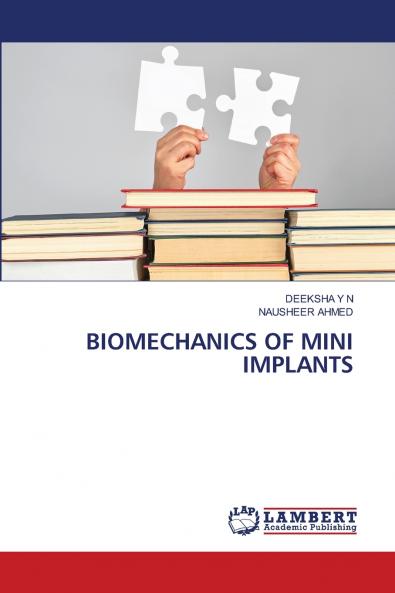
Mini implants also known as temporary anchorage devices (TADs) have transformed orthodontic biomechanics by providing absolute anchorage with minimal patient compliance. Their small size ease of placement and versatility allow force systems to be applied directly to skeletal structures reducing unwanted reciprocal tooth movements. This review discusses the biomechanical principles underlying mini implant use including optimal site selection insertion angulation load distribution and factors influencing primary and secondary stability. Clinical applications such as intrusion retraction molar uprighting and en-masse movement are highlighted along with considerations of implant design and force vectors. Emphasis is placed on how mini implants expand treatment possibilities while minimizing anchorage loss thus serving as a reliable adjunct in contemporary orthodontics.

Piracy-free

Assured Quality

Secure Transactions

Fast Delivery

Sustainably Printed
Details
ISBN 13
9786138268659
Publication Date
-27-10-2025
Pages
-116
Weight
-169 grams
Dimensions
-152x229x6.99 mm
