

English


₹4195
(All inclusive*)
Paperback
Delivery Options
Please enter pincode to check delivery time.
*COD & Shipping Charges may apply on certain items.
Review final details at checkout.
Looking to place a bulk order? SUBMIT DETAILS
Delivery Options
Please enter pincode to check delivery time.
*COD & Shipping Charges may apply on certain items.
Review final details at checkout.
About The Book
Description
Author
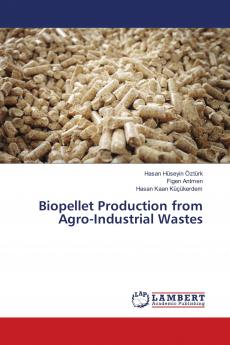
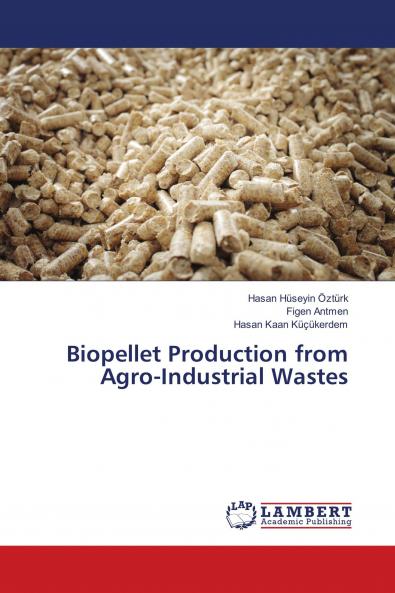
The agro-industrial wastes with more potential to be used as carbon source are those generated in the food industry. One of the effective methods for using agro-industrial wastes as improved solid fuels is pelletizing. In recent years pelletization has become increasingly prevalent and the use of pellets has become widespread. The pelletizing process increases the density of the material reduces transportation storage and transport costs and ensures homogeneity in size and shape can be fed automatically to the combustion systems for thermal purposes thus enabling more efficient use of the material.In this study biopellets were made of some of the agro-industrial wastes (tea pulp cotton gin residue and olive pomace) and some thermo-chemical characteristics such as the gross and the net calorific values (GCV and NCV) hydrogen (H2) and total sulphur (S) contents the moisture content the total moisture and the volatile matters of the biopellets were determined and compared to the standards used in the European Union for biomass-made pellets.

Piracy-free

Assured Quality

Secure Transactions

Fast Delivery

Sustainably Printed
Details
ISBN 13
9786139865383
Publication Date
-26-07-2018
Pages
-60
Weight
-91 grams
Dimensions
-150x220x3.68 mm
