


This Book is Out of Stock!
English


Paperback
₹528
₹795
33.58% OFF
(All inclusive*)
Delivery Options
*COD & Shipping Charges may apply on certain items.
Review final details at checkout.
Looking to place a bulk order? SUBMIT DETAILS

Piracy-free

Assured Quality

Secure Transactions
About The Book
Description
Author
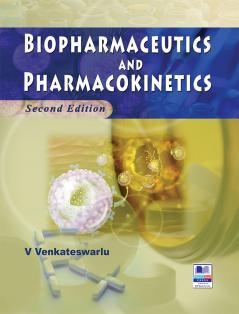
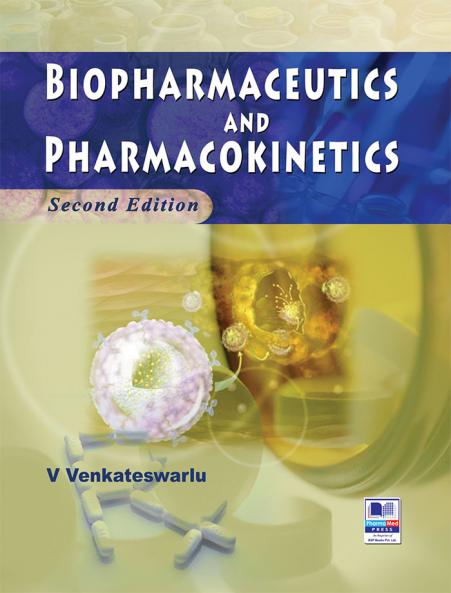
The book Biopharmaceutics and Pharmacokinetics published by BSP (a publisher often known for pharmacy-related academic resources) is likely a comprehensive textbook designed for students in pharmacy programs particularly those pursuing a Bachelor of Pharmacy (B. Pharm) or Master of Pharmacy (M. Pharm). This book typically integrates the study of the interaction between drugs the body (biopharmaceutics) and how the body processes these drugs (pharmacokinetics).Here's a description of the contents and features you might expect in such a book:OverviewThis textbook serves as an essential guide to understanding the principles of biopharmaceutics and pharmacokinetics two critical fields of study in pharmaceutical sciences. It focuses on the processes by which drugs are absorbed distributed metabolized and eliminated by the body (ADME) and how these processes affect drug action therapeutic outcomes and dosage design.Key FeaturesFoundational Concepts: The book begins with an introduction to the basic principles of biopharmaceutics and pharmacokinetics providing a strong theoretical foundation. It discusses:Biopharmaceutics: The study of the relationship between the physical/chemical properties of a drug its dosage form and its biological effects.Pharmacokinetics: The mathematical modeling of the absorption distribution metabolism and excretion (ADME) of drugs and how these processes influence drug efficacy and safety.Absorption and Drug Bioavailability:Gastrointestinal Absorption: The processes involved in how a drug is absorbed through the gastrointestinal tract.Factors Affecting Absorption: pH solubility permeability and presence of food or other drugs.Bioavailability and Bioequivalence: How the drug's formulation and delivery system affect its availability at the site of action.Pharmacokinetic Principles:Plasma Concentration-Time Profiles: Understanding how drug concentration in the bloodstream varies over time.Pharmacokinetic Parameters: Key parameters such as absorption rate constant (ka) half-life (t½) volume of distribution (Vd) clearance (Cl) and elimination rate constant (k).Dosing and Regimen Design: Mathematical tools for determining the appropriate drug dose and regimen for patients based on pharmacokinetic parameters.Mathematical Models in Pharmacokinetics:One-Compartment and Two-Compartment Models: Models describing drug distribution and elimination in the body.Zero-Order and First-Order Kinetics: Describing how the rate of drug metabolism and elimination depends on concentration.Pharmacokinetic Equations: Mathematical formulas for calculating half-life clearance volume of distribution etc.Drug Metabolism and Elimination:Metabolism: How drugs are chemically altered in the liver and other organs including Phase I and Phase II reactions.Elimination: The processes by which drugs are removed from the body including renal excretion and biliary elimination.Therapeutic Drug Monitoring (TDM):Importance of monitoring drug levels in patients to ensure effective therapy while avoiding toxicity.Adjusting dosages based on pharmacokinetic data for individualized therapy.Pharmacokinetic Modeling and Simulation:Use of software tools for simulating pharmacokinetic data and predicting the effects of various dosing regimens.Case Studies and Real-World Applications:Case studies and clinical scenarios where biopharmaceutics and pharmacokinetics are applied to solve real-world pharmaceutical problems such as designing drug delivery systems determining therapeutic drug levels and optimizing drug therapy.Interactive Learning:The book might include numerous practice problems quizzes and exercises to help students understand key concepts and apply them to clinical practice.
Piracy-free
Assured Quality
Secure Transactions
*COD & Shipping Charges may apply on certain items.
Review final details at checkout.
₹528
₹795
33% OFF
Paperback
Out Of Stock
All inclusive*
Details
ISBN 13
9789381075128
Publication Date
-20-08-2025
Pages
-528
Weight
-703 grams
Dimensions
-184.15x241.28x20.96 mm
