

English


Paperback
₹6413
₹7558
15.15% OFF
(All inclusive*)
Delivery Options
Please enter pincode to check delivery time.
*COD & Shipping Charges may apply on certain items.
Review final details at checkout.
Looking to place a bulk order? SUBMIT DETAILS

Piracy-free

Assured Quality

Secure Transactions
About The Book
Description
Author(s)
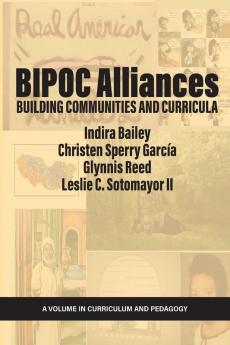
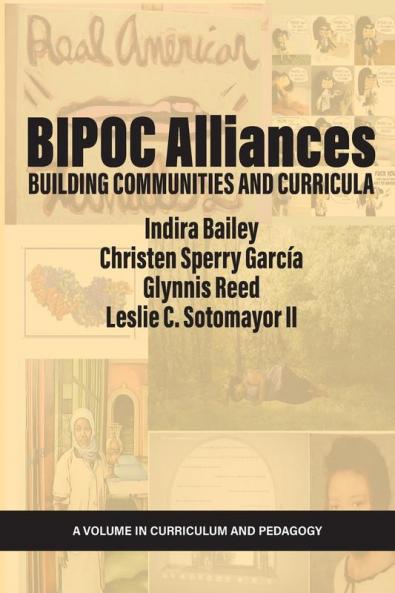
<p class=ql-align-justify><em>BIPOC Alliances: Building Communities and Curricula </em>is a collection of reflective experiences that confront challenge and resist hegemonic academic canons. BIPOC perspectives are often scarce in scholarly academic venues and curriculum. This edited book is a curated collection of interdisciplinary underrepresented voices and lived experiences through critical methodologies for empowerment (Reilly &amp; Lippard 2018). Gloria Anzaldúa's (2015) autohistoria-teoría is a lens for decolonizing and theorizing of one's own experiences historical contexts knowledge and performances through creative acts curriculum and writing. Gloria Anzaldúa coined autohistoria-teoría a feminist writing practice of testimonio as a way to create self-knowledge belonging and to bridge collaborative spaces through self-empowerment. Anzaldúa encouraged us to focus towards social change through our testimonios and art [t]he healing images and narratives we imagine will eventually materialize (Anzaldúa &amp; Keating 2009 p. 247). </p><p class=ql-align-justify>&nbsp;</p><p>For this collection we use lived experience or testimonios as an approach a method to conduct research and to bear witness to learners and one's own experiences (Reyes &amp; Rodríguez 2012). Maxine Greene's (1995) concept of an emancipated pedagogy merges art culture and history as one education that empowers students with Gloria Anzaldúa's (2015) autohistoria-teoría to re-imagine individual and collective inclusion by allowing students ... to read and to name to write and to rewrite their own lived worlds (Greene 1995 pp. 147). Greene and Anzaldúa reach beyond theorizing and creating curriculum for awareness and expand the crossings into active and critical self-reflective work to rewrite one's own empowered stories and engage in a healing process.</p>
Piracy-free
Assured Quality
Secure Transactions
Delivery Options
Please enter pincode to check delivery time.
*COD & Shipping Charges may apply on certain items.
Review final details at checkout.
Details
ISBN 13
9798887300573
Publication Date
-06-09-2022
Pages
-200
Weight
-292 grams
Dimensions
-156x234x10.76 mm
